ADHD in Women: Why Diagnosis Takes Longer and What the Evidence Shows
ADHD in girls and women is often recognized later because signs can be less conspicuous, mistaken for other conditions, or hidden by years of effortful coping. The diagnostic criteria are the same across sexes, but people’s experiences, support needs, and routes to assessment can differ. Recognizing those differences matters.
A later diagnosis does not mean ADHD suddenly began in adulthood. Diagnostic guidelines look for evidence that symptoms started during childhood, even when no one recognized them at the time. Prof. Davida Hartman, a Chartered Educational and Child Psychologist, discussed this distinction and the limits of current understanding on Medical News Today’s In Conversation podcast. The useful question is not whether a person matches a stereotype; it is whether a careful assessment explains persistent difficulties and strengths across their life.
What Is ADHD in Women?
Attention deficit hyperactivity disorder (ADHD) is a neurodevelopmental condition involving persistent patterns of inattention and/or hyperactivity and impulsivity that interfere with daily life. It is not a measure of intelligence, ambition, kindness, or how much someone cares. People with ADHD vary widely: two people can share a diagnosis and have very different symptoms, abilities, and support needs.
The diagnostic framework does not define a separate form of ADHD for women. Clinicians assess the same core symptoms and require evidence of impairment, symptoms in more than one setting, and a developmental history consistent with ADHD. For adults, clinicians also check whether several symptoms were present before age 12. A diagnosis relies on a qualified professional’s full assessment, not a brain scan, online quiz, or single score. The CDC’s overview of ADHD diagnosis describes this broader process.
The phrase ADHD in women is still useful because the route to recognition can be shaped by expectations about how girls and women should behave. A quiet child who loses belongings, drifts off during lessons, or takes hours to finish homework may be called dreamy or disorganized rather than assessed. An adult who builds elaborate reminders to keep work on track may look fine from the outside while spending far more effort than colleagues realize.
When I compare the diagnostic criteria with common stereotypes, the mismatch is obvious: the stereotype expects visible disruption, while impairment can also look like chronic lateness, mental exhaustion, or difficulty beginning routine tasks. That does not mean every struggle is ADHD. Sleep disorders, anxiety, depression, trauma, learning differences, physical illness, and stressful circumstances can produce overlapping problems and deserve proper consideration. The point is to investigate the whole pattern instead of treating one explanation as automatic.
Why Do Women Often Receive an ADHD Diagnosis Later?
There is no single reason. A frequently repeated estimate, including in the podcast discussion, is that women receive an ADHD diagnosis about five years later than male peers. It should be treated as an estimate rather than a universal rule: age gaps vary between studies, populations, and health systems. What is well recognized is that girls and women can be missed, referred later, or first assessed for other concerns.
One factor is referral bias. A child who interrupts, climbs, or disrupts a classroom may draw attention quickly. A child who daydreams, quietly forgets instructions, or works twice as long to finish may not. This is a pattern, not a rule about boys or girls. Girls can be visibly hyperactive, and boys can have predominantly inattentive symptoms; stereotypes simply influence what adults notice and what they report.
Another factor is masking and compensation. Some people copy classmates’ routines, overprepare, rely on a parent to organize schoolwork, or stay up late to finish tasks. Good grades do not automatically rule out ADHD; they may reflect high ability, intense effort, external structure, or a mix of these. The cost can show up later, when independent work, employment, relationships, or parenting demand more self-management.

Anxiety and depression may be recognized first. They can coexist with ADHD, develop in response to years of stress, or sometimes better explain the person’s difficulties. A clinician should assess rather than assume. The expert consensus statement on females with ADHD discusses how presentation across the lifespan can be missed when assessment relies too heavily on familiar male-coded examples. Social expectations, access to specialists, culture, and the availability of childhood records can add further obstacles. None of these factors proves ADHD by itself; together they explain why asking only whether someone was disruptive as a child is a poor screening shortcut.
How Can ADHD Present in Girls and Women?
Inattention can appear as losing track of instructions, forgetting appointments, misplacing everyday items, struggling to prioritize, or starting several tasks without finishing them. Someone may read the same paragraph repeatedly, miss details despite caring about the result, or find ordinary administration unusually draining. These problems are not simply a preference for mess or a failure to try. For a diagnosis, the pattern must be persistent and cause meaningful difficulty.
Hyperactivity does not always look like a child running around a room. It may be experienced as internal restlessness, feeling driven to keep busy, talking rapidly, interrupting, or finding it hard to relax. Impulsivity can involve acting or speaking before considering consequences, difficulty waiting, or making quick decisions. These examples are possibilities, not a checklist for self-diagnosis. ADHD can also involve strengths such as curiosity, energy, or creative problem-solving, but strengths do not cancel out impairment.
In childhood, a girl may be described as scattered, overly talkative, emotionally reactive, or capable but inconsistent. At school, structure and close adult supervision can hide difficulties. At university or in a first job, the person may suddenly have to manage a calendar, deadlines, finances, and household tasks without that scaffolding. Adult life does not create childhood-onset ADHD; it can make an existing pattern harder to compensate for.
Later, caring responsibilities, a demanding role, relationship changes, illness, or reduced support can expose long-standing difficulties. In the podcast, Hartman emphasized that people who were supported earlier may manage for years before new demands overwhelm familiar strategies. Clinicians should ask about daily function, not only job title or academic achievement. Two people with comparable symptoms may have very different impairment because their environments differ. A detailed account of what it takes to stay afloat is often more useful than the simple question, “Are you coping?”
Why Does Recognizing ADHD Matter?
A sound diagnosis can give a person a clearer explanation for longstanding difficulties and help them choose appropriate support. It is not a magic fix, and it does not erase missed opportunities or past strain. Still, an accurate account can replace the unhelpful story that someone is lazy, careless, or simply not trying hard enough. That change in understanding may help a person discuss practical needs with family, educators, or an employer.
Recognition also helps clinicians consider the whole picture. If anxiety is present, a careful assessment can ask whether it stands alone, co-occurs with ADHD, or has developed alongside chronic overload. The same applies to depression, sleep problems, learning differences, and other health concerns. Treating one issue does not make the others disappear. The National Institute of Mental Health’s ADHD information summarizes treatment options and the need to tailor care.
Support may include medication, therapy, skills-based coaching, workplace or educational adjustments, and practical changes to routines. Not everyone needs medication, and not everyone who wants it can take it safely. Decisions belong with the person and a suitably qualified clinician, taking account of symptoms, health history, preferences, possible side effects, and follow-up. The NICE ADHD guideline sets out assessment and management recommendations for children, young people, and adults.
Here’s the kicker: assessment is not about proving that a person has struggled enough to deserve help. It is about understanding what is happening and what would make daily life more manageable. Caring for health is a form of stewardship, not a demand to optimize every hour. Support should respect the person’s dignity and real circumstances, rather than turn a diagnosis into another standard they can fail.
How to Seek an ADHD Assessment: A Step-by-Step Guide
- Write down what is difficult now. For a few weeks, note concrete examples: missed deadlines, forgotten plans, difficulty shifting between tasks, or restlessness that affects sleep or relationships. Record how often it happens, where it happens, and what helps. Specific examples are more informative than a label like “bad at focusing.”
- Look back at childhood without demanding perfect proof. Think about school reports, family stories, repeated lost items, unfinished work, or needing extensive reminders. If records or an adult who remembers your childhood are available, they may help. Their absence does not automatically settle the question; childhood recollection can be incomplete, and clinicians should consider the full evidence.
- Contact a qualified healthcare professional. Ask about the local route to an assessment by a clinician trained in ADHD. Rules and referral pathways vary by country. A general practitioner or primary-care clinician may advise where to start, but a brief appointment or online checklist is not a complete assessment. If you are already receiving mental-health care, explain that you want ADHD considered as part of a broader evaluation.
- Prepare for a broad conversation. A proper assessment should cover developmental history, symptoms in different settings, current impairment, health and mental-health history, and possible alternative or co-occurring explanations. A rating scale can support this work, but it cannot replace it. Bring examples of coping strategies too: the amount of effort required to appear organized can be relevant.
- Ask how the clinician reached the conclusion. You should be able to understand what evidence supports or does not support the diagnosis, what uncertainties remain, and what other explanations were considered. If the assessment is inconclusive, ask what additional information could help and whether another appointment or specialist opinion is appropriate. A second opinion may be reasonable when important concerns have not been addressed.
- Discuss support as an individual plan. Options may include medication, psychological treatment, coaching, adjustments at school or work, and practical help with planning or sleep. Ask about likely benefits, risks, monitoring, costs, and alternatives. A response to ADHD medication does not confirm ADHD on its own; medication decisions should follow assessment and medical review, not act as a diagnostic experiment.
I read the evidence as favoring patience and precision over a quick label. A good assessment should make room for uncertainty without brushing a person off. Bring the details, ask direct questions, and expect the clinician to explain their reasoning. That is a better standard than either automatic diagnosis or automatic dismissal.
ADHD and Anxiety: What Is the Difference?
ADHD and anxiety can overlap, and they can occur together. Trouble concentrating, restlessness, irritability, and disrupted sleep may appear in either condition. The useful comparison is not a contest over which label “wins”; it is an examination of the person’s developmental history, triggers, timing, and day-to-day pattern.
| Feature | ADHD | Anxiety |
|---|
| Core pattern | Persistent inattention and/or hyperactivity-impulsivity that causes impairment | Excessive fear, worry, or related symptoms that cause distress or impairment |
| Typical history | Symptoms begin in childhood, even if recognized much later | May begin at different ages and can be linked to particular concerns or experiences |
| Concentration difficulty | Can occur across tasks and settings, including when a person is not worried | May worsen when attention is occupied by worry or threat |
| Co-occurrence | Can be diagnosed alongside anxiety when both sets of criteria are met | Can be diagnosed alongside ADHD when both sets of criteria are met |
| Assessment | Developmental history, current symptoms, impairment, and other possible explanations | Nature of worry, physical and emotional symptoms, duration, context, and impairment |
This table is a guide to questions, not a diagnostic tool. A person with ADHD may worry because repeated missed deadlines have consequences; someone with anxiety may struggle to focus because worry occupies their attention. Some people have both, and the distinction may require a full clinical assessment. Anxiety should not be dismissed as “just ADHD,” and ADHD should not be dismissed because anxiety is also present. The CDC diagnostic guidance stresses that diagnosis involves multiple sources of information and consideration of other conditions.
Perimenopause, ADHD, and What Research Still Cannot Say
Some women report that ADHD-related difficulties feel more noticeable during perimenopause, a transition that can involve changes in sleep, mood, and concentration. Prof. Hartman described ADHD-and-perimenopause findings as emerging research and noted that some reports suggest more significant symptoms for people with ADHD. That cautious framing matters: this area is not settled, and symptoms during this stage do not by themselves establish an ADHD diagnosis.
Hormonal changes may affect cognitive and emotional experiences, but the ADHD-specific evidence is still limited. Research also has to separate overlapping influences: sleep disruption, hot flashes, mood changes, life stress, existing mental-health conditions, medication changes, and ADHD symptoms can all affect concentration. Claims that perimenopause routinely begins earlier for people with ADHD, or that a particular hormone treatment is an ADHD treatment, go beyond what a person should infer from preliminary findings.
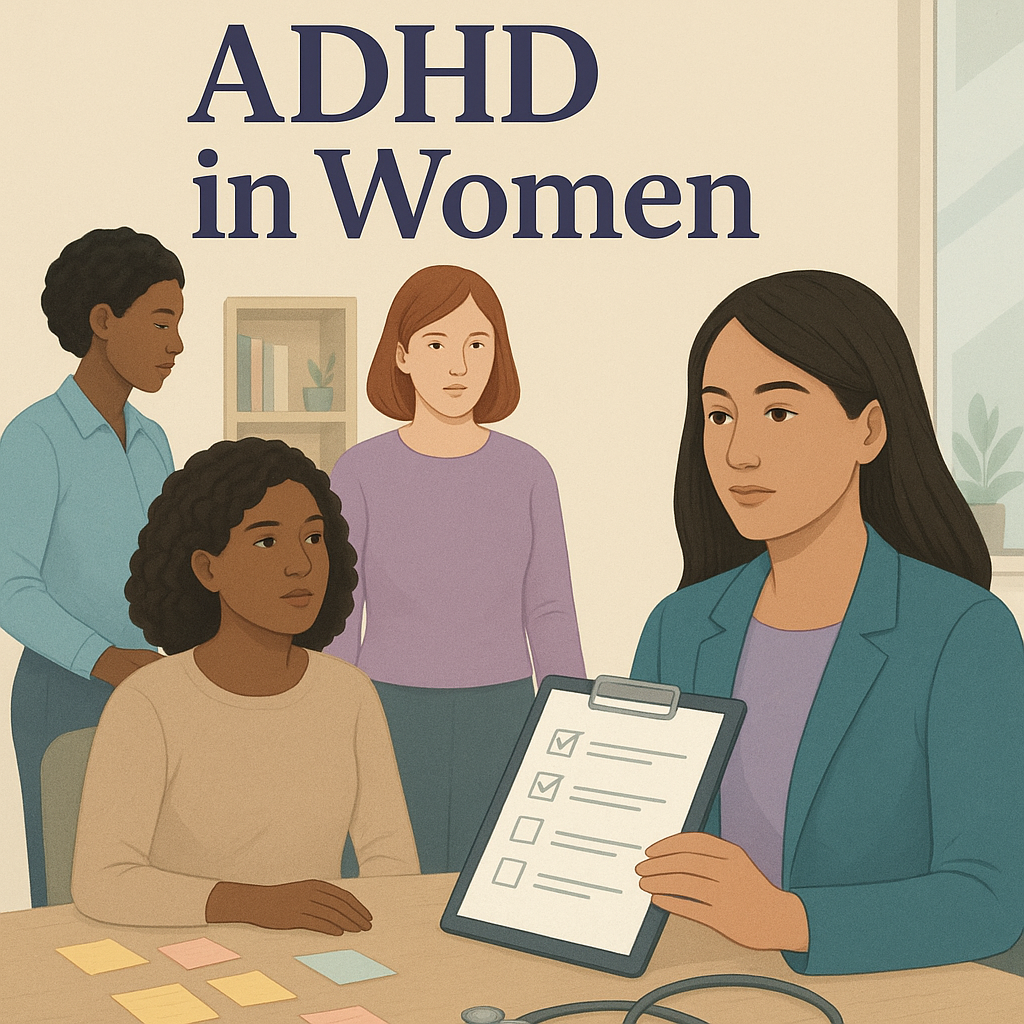
If focus, organization, or emotional regulation changes around perimenopause, note when the changes began and discuss them with a healthcare professional. Bring up both current symptoms and the earlier-life history, because ADHD is developmental even when it is identified in adulthood. A clinician can also consider sleep, mood, physical health, and medication effects rather than attributing every new difficulty to one cause.
Research has not kept pace evenly with the complexity of women’s experiences. Reviews and consensus work have called attention to under-recognition and gaps across the lifespan, but they are not a substitute for large, diverse studies. The review of ADHD in women and girls is useful background on missed diagnosis and clinical considerations. Better studies need to include varied ages, backgrounds, and support needs, and to distinguish established findings from plausible hypotheses. For now, careful assessment beats confident speculation.
Common Mistakes to Avoid
Assuming good grades rule out ADHD. Academic achievement can coexist with serious effort, late nights, strong external support, or difficulties in other settings. Ask what the person had to do to meet expectations and whether the pattern was sustainable. Results alone do not tell the whole story.
Using a stereotype as a screening test. “She was not disruptive” is not a reliable reason to stop asking questions. Equally, forgetfulness or disorganization alone does not prove ADHD. The assessment needs a persistent developmental pattern, impairment, and consideration of other causes.
Treating anxiety and ADHD as mutually exclusive. One diagnosis may explain some difficulties while another explains others. If treatment for one condition helps only partly, that does not prove a second condition, but it can be a reason for a fuller review. The answer is careful assessment, not a contest between labels.
Treating a checklist or medication response as proof. Screening tools can flag questions for further review. They do not diagnose on their own. A person’s response to medication is also not a diagnostic test, because treatment effects are not unique to ADHD and side effects or risks need professional oversight.
Expecting childhood documents to tell the entire story. School reports can be useful, but records may be missing or may say little about a quiet student who worked hard to compensate. A clinician can weigh multiple forms of evidence, including personal history and current impairment, rather than treating one absent document as the final word.
Expecting a diagnosis to solve every practical problem. A label may help make sense of experience, but support still takes planning, follow-up, and adjustment. Medication does not replace sleep, therapy, accommodations, or help with daily systems when those are needed. Frankly, no single intervention fixes every person’s life, and promises to the contrary deserve skepticism.
Frequently Asked Questions
Why are women diagnosed with ADHD later?
Many girls and women have symptoms that are less disruptive to others, are mistaken for anxiety or another concern, or are partly hidden by effortful coping. Diagnostic stereotypes and unequal access to assessment can contribute too. A later diagnosis does not mean symptoms began later; a clinician assesses whether the pattern was present during childhood and continues to cause impairment.
Is ADHD in girls different from ADHD in boys?
The diagnostic criteria are the same. Some research and clinical accounts describe girls as more likely to show inattentive symptoms or to have difficulties that are less visible in a classroom, but those are group-level tendencies, not rules. Girls can be hyperactive, boys can be inattentive, and each person needs an individual assessment.
Can perimenopause make ADHD symptoms worse?
Some people report changes, and early research is examining links between hormonal transitions and ADHD symptoms. The evidence is not strong enough to predict what will happen to an individual or to treat perimenopause as the cause of every new difficulty. Discuss changes with a clinician, including sleep, mood, physical symptoms, and any earlier ADHD-like pattern.
Does everyone with ADHD need medication?
No. Medication can help some people, but treatment is individual and can include psychological support, skills training, coaching, accommodations, or practical changes to routines. A qualified clinician can discuss benefits, risks, preferences, and monitoring. A medication response alone cannot establish an ADHD diagnosis.
Final Thought
A woman who receives an ADHD diagnosis in adulthood may be looking at a pattern that was there all along, not discovering a condition that suddenly appeared. The delay can reflect quiet symptoms, strong support, elaborate coping, narrow expectations, or an assessment system that did not ask the right questions. Those explanations deserve scrutiny, not shame.
The sensible next step is neither to diagnose every distracted person nor to dismiss someone who does not fit a familiar picture. It is to take the person’s history seriously, assess symptoms across settings, consider overlapping conditions, and explain what the evidence does and does not show. That approach leaves room for the real complexity of ADHD without turning uncertainty into an excuse for inaction.
Bodies and minds deserve care, not punishment for failing to meet an imaginary standard of effortless productivity. A diagnosis is useful when it helps someone understand their needs and choose support that fits. If the conversation leads to better questions, more suitable care, and less needless self-blame, it has done something worthwhile.