ADHD in Women: Why Diagnosis Is Delayed, How Symptoms Can Differ, and What Helps
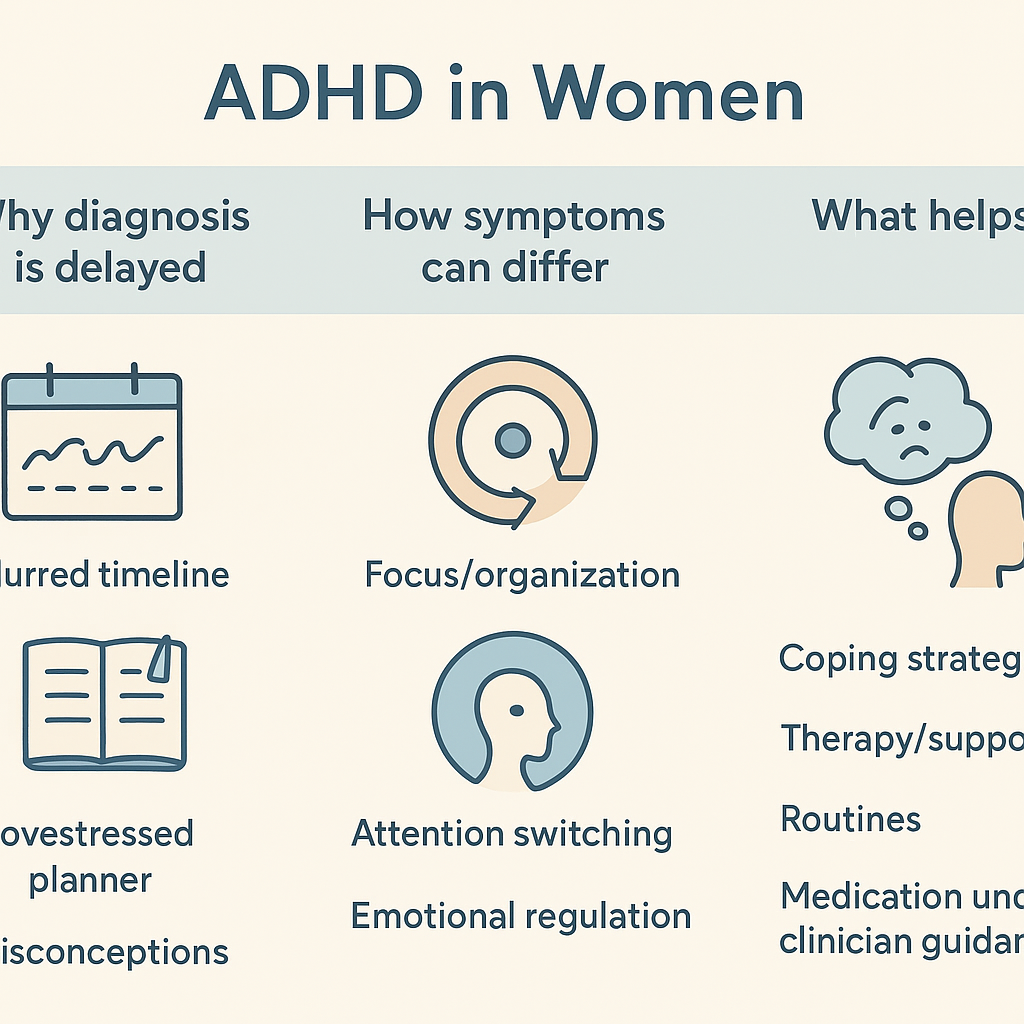
ADHD in women is often recognized later because symptoms may be less disruptive to other people, more easily mistaken for anxiety or stress, or concealed through years of effortful coping. A careful assessment looks beyond stereotypes: it considers lifelong patterns, impairment across settings, health history, and the person’s own account.
The Medical News Today podcast discussion cites an estimate that women receive an ADHD diagnosis about five years later than male peers. That number is not a universal rule; age at diagnosis varies by study, country, access to care, and the people included. The broader concern is well established: girls and women can be overlooked when clinicians, families, and schools expect ADHD to look like obvious hyperactivity or disruptive behavior.
Prof. Davida Hartman, a Chartered Educational and Child Psychologist with the Psychological Society of Ireland, has emphasized that research on women’s experiences remains limited in important areas. She also points to the burden of trying to meet expectations while managing symptoms, and to the value of accepting people without treating forgetfulness or lateness as proof that they do not care. That distinction matters. Recognition should lead to useful support, not another reason to shame someone.
What Is ADHD in Women?
Attention-deficit/hyperactivity disorder (ADHD) is a neurodevelopmental condition associated with persistent patterns of inattention and/or hyperactivity and impulsivity that interfere with functioning. It begins during childhood, although a person may not receive a diagnosis until adolescence or adulthood. The condition is not simply being distracted now and then. Clinicians look for a sustained pattern, evidence that symptoms began in childhood, and meaningful effects in more than one area of life.
ADHD is diagnosed in people of all genders. The diagnostic criteria do not describe a separate “women’s ADHD,” but the way symptoms are noticed, interpreted, and managed can differ. Some girls and women experience conspicuous restlessness or impulsive behavior. Others chiefly struggle with focus, organization, time management, working memory, task initiation, or keeping track of everyday responsibilities. A person can also have a mix of these features.
The familiar picture of a child who cannot stay seated is incomplete. Inattention may look like losing the thread of a conversation, missing details, forgetting appointments, or finding it hard to start a task despite caring about the outcome. Hyperactivity can feel internal: racing thoughts, a persistent need to move, or difficulty settling. These patterns are not exclusive to women, and no single behavior proves ADHD.
The expert consensus statement on females with ADHD describes how symptoms and associated difficulties can change across the lifespan, while warning that recognition and research have often lagged. A review of ADHD in girls and women likewise discusses ways the condition may be missed when clinicians rely on narrow stereotypes. Neither source means every woman with anxiety, disorganization, or intense emotions has ADHD. Assessment needs context, not a checklist used in isolation.
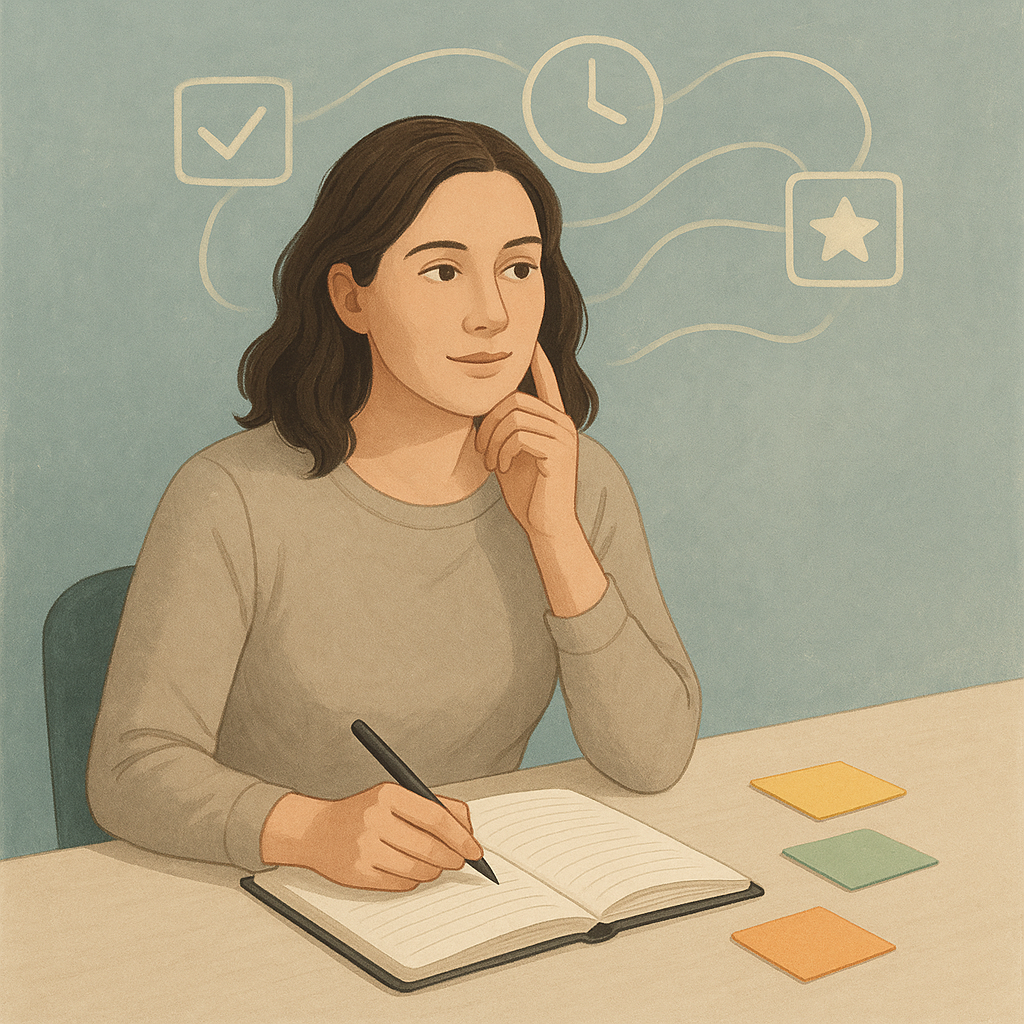
Some people develop ways to compensate. They may build elaborate reminder systems, overprepare, avoid situations where mistakes could show, or rely on a partner to manage appointments and household details. These strategies can help, but they may consume time and energy. A person who appears organized from the outside might be maintaining that appearance through exhausting effort.
ADHD also commonly overlaps with other concerns. Anxiety, depression, sleep problems, learning differences, trauma, and other neurodevelopmental conditions may coexist or produce some similar difficulties. A sound evaluation asks what explains the full pattern, rather than assuming every symptom has one cause. The CDC’s overview of ADHD diagnosis explains that diagnosis relies on information from more than one source and that other conditions can matter.
Why Recognition Matters
A diagnosis does not hand someone a new personality. It can, however, give a useful explanation for repeated problems and open the door to appropriate care. Frankly, “try harder” is not a treatment plan. When difficulties have been misread as laziness, carelessness, or a lack of commitment, naming the underlying pattern may reduce self-blame and help someone choose practical strategies.
- It can make support more specific. A person who struggles to begin tasks may need help breaking work into visible steps, while someone who loses track of commitments may benefit from shared calendars and reminders. Generic advice to “get organized” often skips the hard part: building a system the person can actually use.
- It can prompt a fuller health assessment. ADHD symptoms may overlap with anxiety, depression, sleep disorders, and other conditions. A qualified clinician can consider whether one or several issues are present and discuss suitable treatment options.
- It can improve communication. Partners, relatives, and colleagues may understand that forgetting a message or misjudging time is not automatically a sign of indifference. Hartman has stressed the importance of accepting people and avoiding anger over symptoms when care and commitment are otherwise clear.
- It can inform education and workplace support. Depending on local rules and individual needs, practical adjustments might include written instructions, fewer avoidable interruptions, or breaking a long project into checkpoints. A diagnosis does not guarantee a particular accommodation, but it can help a person explain what gets in the way.
- It can help protect wellbeing. Repeatedly compensating for symptoms may add stress and exhaustion. Support that reduces unnecessary load can leave more room for sleep, relationships, exercise, and ordinary life—not just another round of catching up.
Recognition should not turn ADHD into a total explanation for every difficulty. A person can have ADHD and still need separate care for depression, a medical condition, relationship problems, or a rough stretch at work. The point is to assess the whole person, not to replace one simplistic label with another.
There is also a research problem. Studies have not always represented girls and women well, and research on life stages such as perimenopause remains early. Hartman has described this evidence as limited, including small studies examining ADHD and perimenopause. Some findings suggest a possible association with more significant symptoms, but they are not enough to establish a general rule or explain an individual’s experience. Better research needs larger, more representative groups and careful measurement over time.
A Practical Guide to Seeking Assessment and Support
A useful next step is not to diagnose yourself from a social media post. It is to record what is happening, how long it has been happening, and where it affects daily life. When I assess claims about ADHD, I look for the difference between a relatable trait and a persistent pattern with real impairment. Everyone forgets things occasionally. The clinical question is whether difficulties are longstanding, occur across settings, and cause meaningful trouble.
- Write down concrete examples. Note what happens at home, work, school, or in relationships. “I’m disorganized” is broad; “I missed three bill deadlines despite having money set aside” gives a clinician something to assess. Include strengths and successful strategies, too. They help explain how you function, not just what goes wrong.
- Look for a childhood pattern. ADHD symptoms begin during childhood, even if they were not recognized at the time. Consider report cards, family recollections, old evaluations, or recurring problems with homework, belongings, time, and attention. Records can be useful, but a missing report card should not be treated as proof that an adult cannot have ADHD. The clinician will consider the available history as a whole.
- Ask a qualified clinician about a full evaluation. Start with a primary-care clinician or mental health professional who can explain local assessment pathways and refer you when needed. Depending on the health system, diagnosis may be made by a psychiatrist, psychologist, or another appropriately trained specialist. Ask whether the evaluator assesses ADHD in adults and how they consider symptoms that may be less visible.
- Expect questions, not a magic scan. Assessment commonly involves a clinical interview, symptom rating scales, developmental history, and information about functioning in different settings. With permission, a clinician may ask someone who knows you well or review relevant records. Rating scales can organize information, but they do not make the diagnosis on their own. The NICE guideline on ADHD sets out recommendations for assessment and management, including the role of specialist expertise.
- Discuss other explanations and co-occurring conditions. Sleep loss, anxiety, depression, trauma, substance use, medical problems, and learning differences can affect attention and energy. They may resemble ADHD, coexist with it, or make symptoms harder to manage. A careful assessment does not dismiss your concerns; it checks which explanation best fits the full timeline and whether more than one condition needs attention.
- Ask what treatment could look like for you. Options may include medication, ADHD-focused psychological support, coaching or skills work, and practical changes at home, school, or work. The right plan depends on symptoms, health history, preferences, and local clinical guidance. Medication decisions belong with a qualified prescriber, who can explain benefits, risks, and monitoring. The National Institute of Mental Health ADHD information also describes treatment as something to discuss with a health professional.
- Build support around daily life, not an idealized routine. Try external reminders, a consistent place for keys, written instructions, shorter work blocks, or a calendar shared with people involved. Pick one system and test whether it reduces friction. If the system needs constant upkeep and collapses every week, it is not a moral failure; it may simply be the wrong tool.
- Treat general health as support, not a cure. Regular movement, adequate sleep, nourishing meals, and time to recover can support wellbeing and day-to-day functioning. They do not replace assessment or proven ADHD treatment. Exercise should suit the person’s ability and circumstances; food should not be framed as a test of discipline. Bodies deserve care and responsible stewardship, not punishment for symptoms.
If a clinician says ADHD is unlikely, ask what else might explain the pattern and what support is appropriate. A second opinion may be reasonable when concerns remain and the first assessment did not address developmental history or daily impairment. That does not mean shopping for a preferred answer. It means seeking a careful evaluation when the original one left important questions unanswered.
ADHD in Women and Men: A Cautious Comparison
Comparisons can help explain why some people are missed, but they can also harden stereotypes. These are population-level patterns, not rules for diagnosing an individual. Men may show inattentive symptoms; women may show hyperactivity or impulsivity. Gender, culture, expectations, access to care, and the clinician’s assumptions all influence what gets noticed.
| Area | ADHD in women and girls: patterns that may be overlooked | ADHD in men and boys: patterns often recognized sooner |
|---|
| Visible behavior | Inattention, internal restlessness, or effortful coping may draw less attention | More visible hyperactivity or impulsive behavior may prompt referral |
| Common interpretation | Difficulties may be attributed to anxiety, mood, stress, or personality | Disruptive behavior may be more readily linked to ADHD |
| Coping | Overpreparing, masking, and relying on detailed systems can conceal effort | Symptoms may be noticed when behavior disrupts class, work, or home |
| Diagnosis | Recognition may come after years of impairment or when demands increase | Referral may happen earlier in some childhood settings |
| Important caveat | These are tendencies reported in research, not diagnostic criteria | These are tendencies reported in research, not diagnostic criteria |
The table describes referral patterns, not biology that divides people into two neat groups. A quieter child can have serious impairment. A highly active girl can be missed, too. Conversely, a man or boy may mask symptoms, receive a different diagnosis first, or encounter barriers to care. Clinicians should assess the individual in front of them, not compare that person with a stereotype.
Common Mistakes to Avoid
Treating one symptom as a diagnosis is a mistake. Trouble focusing is common during stress, poor sleep, grief, illness, or a demanding period. ADHD assessment asks whether there is a longstanding pattern that began in childhood, affects more than one area of life, and causes impairment. A viral checklist cannot establish that history.
Assuming good grades rule out ADHD is another trap. Some people do well academically through high effort, family support, strong interest in a subject, or fear of failure. Their results may conceal the hours spent restarting assignments or the exhaustion that follows. Grades provide context; they are not a stand-alone test of executive functioning.
Calling coping “proof” that symptoms are absent gets it backwards. A color-coded calendar or a carefully rehearsed routine may reflect skill, but it may also be a workaround that demands constant attention. Ask what it costs to maintain. If a person can complete a task only with extraordinary preparation, that effort belongs in the assessment too.
Assuming anxiety explains everything can delay useful care. Anxiety may be a separate condition, a reaction to repeated missed deadlines, or both. The same applies to depression and low self-esteem. A sound clinician considers how symptoms developed and whether one condition better explains the full pattern, rather than choosing a single label by default.
Using “hormones caused it” as a settled explanation overstates the evidence. Some research is examining ADHD across menstrual changes, pregnancy, and perimenopause, but the evidence is still developing. Hartman has highlighted that research on perimenopause and ADHD includes small studies. People can discuss changes in symptoms with a clinician without treating preliminary findings as established fact.
Expecting exercise, supplements, or a strict diet to cure ADHD is poor advice. Physical activity, adequate sleep, and regular meals can be worthwhile parts of general health care, but none should be sold as a substitute for an assessment or appropriate treatment. Be especially wary of products promising a quick fix. If considering a supplement, discuss possible interactions and safety with a clinician or pharmacist.
Treating lateness or forgetfulness as proof of not caring can hurt relationships. A missed text may still be frustrating, and practical agreements matter. But character attacks rarely solve a memory or time-management problem. Clear expectations, reminders, and a fair division of household tasks are more useful than assuming bad intent.
Finally, do not make “masking better” the entire plan. Someone may benefit from choosing which tasks to simplify, asking for support, and setting limits on responsibilities. Hartman’s advice to women who carry a heavy share of care work is to notice when the load has become too much, rather than assuming they must keep meeting every expectation. That is not selfishness. It is ordinary maintenance of a human life.
Frequently Asked Questions
Why is ADHD often diagnosed later in women?
Girls and women may be missed when symptoms are mainly inattentive, internal, or hidden by coping strategies. Teachers and clinicians may be more likely to notice disruptive behavior, while anxiety, depression, or stress can become the first explanation for difficulties. Assessment access and social expectations also matter. These factors do not apply to every person, and late diagnosis alone does not establish ADHD; a clinician still needs to assess symptoms and developmental history.
Can someone develop ADHD as an adult?
ADHD is a neurodevelopmental condition, so symptoms must have begun during childhood, even if nobody recognized them then. Adults can seek a diagnosis after work, parenting, study, or other demands make longstanding difficulties harder to manage. A clinician will look for evidence of childhood onset and impairment over time, while checking whether another condition better explains the symptoms. Discovering the pattern as an adult is not the same as the condition beginning in adulthood.
Does anxiety mean I do not have ADHD?
No. Anxiety and ADHD can occur together, and one can complicate assessment of the other. Anxiety may also produce concentration problems that resemble some ADHD symptoms, so the clinician needs to understand the timeline, triggers, and effects on daily life. It is reasonable to ask how the evaluation considered both conditions instead of assuming that one diagnosis automatically excludes the other.
Is there a test or scan that confirms ADHD?
There is no single brain scan or blood test that confirms ADHD in routine clinical practice. Diagnosis depends on a qualified clinician’s assessment of symptoms, childhood history, impairment across settings, and possible alternative or co-occurring explanations. Questionnaires and rating scales can contribute useful information, but they are only part of that process. Bring examples and relevant history; do not expect one score to settle the question.
Final Thought
Late recognition can leave a person with years of explanations that amount to “you should be trying harder.” Sometimes people have been trying hard for a very long time. A diagnosis, when it fits, can replace that accusation with a clearer account of what is difficult and a chance to decide what support would help. It does not erase every challenge or explain every part of someone’s identity.
Research on ADHD in women has improved, but important gaps remain, especially around how symptoms are identified across different ages and how health changes may affect some people. Hartman’s comments point to a practical lesson in the meantime: accept the person, ask what is getting in the way, and do not confuse a symptom with a lack of love or effort. Clinicians should assess beyond the stereotype. Partners and families can share the load instead of expecting one person to manage every detail alone.
Good care is not a contest in productivity. It means making room for treatment, useful routines, rest, relationships, and a life that is not spent hiding every difficulty. That is a sensible standard for anyone, whether ADHD is eventually diagnosed or another explanation proves more accurate.