Ebola Virus Disease: How It Spreads, Symptoms, Treatment, and Prevention
Ebola virus disease (EVD) is a severe infection caused by viruses in the orthoebolavirus group. It can be fatal, but the often-repeated claim that it kills 80–90% of everyone infected is misleading: reported case-fatality rates have varied widely, roughly from 25% to 90%, with an average near 50% across outbreaks. Ebola is not known to spread through the air during ordinary contact; infection usually follows direct contact with an infected person’s blood or other body fluids, or with contaminated materials.
The basic facts matter because fear can spread faster than a virus, and inaccurate descriptions can stigmatize people who need care. Ebola is serious, so it deserves clear-eyed attention rather than sensational numbers. If you think you may have been exposed, do not wait to see whether symptoms worsen: avoid contact with others and contact local health authorities or emergency services for instructions. This article offers general information, not a diagnosis or a substitute for public-health guidance.
What Is Ebola Virus Disease?
Ebola virus disease is an uncommon but potentially life-threatening illness caused by viruses in the orthoebolavirus group, formerly often called ebolaviruses. The name covers several distinct viruses; outbreaks are most often associated with Zaire ebolavirus, though other members of the group can also cause disease. The distinction is practical, not just taxonomic: vaccines and specific treatments may work against one virus species without protecting against every other one.
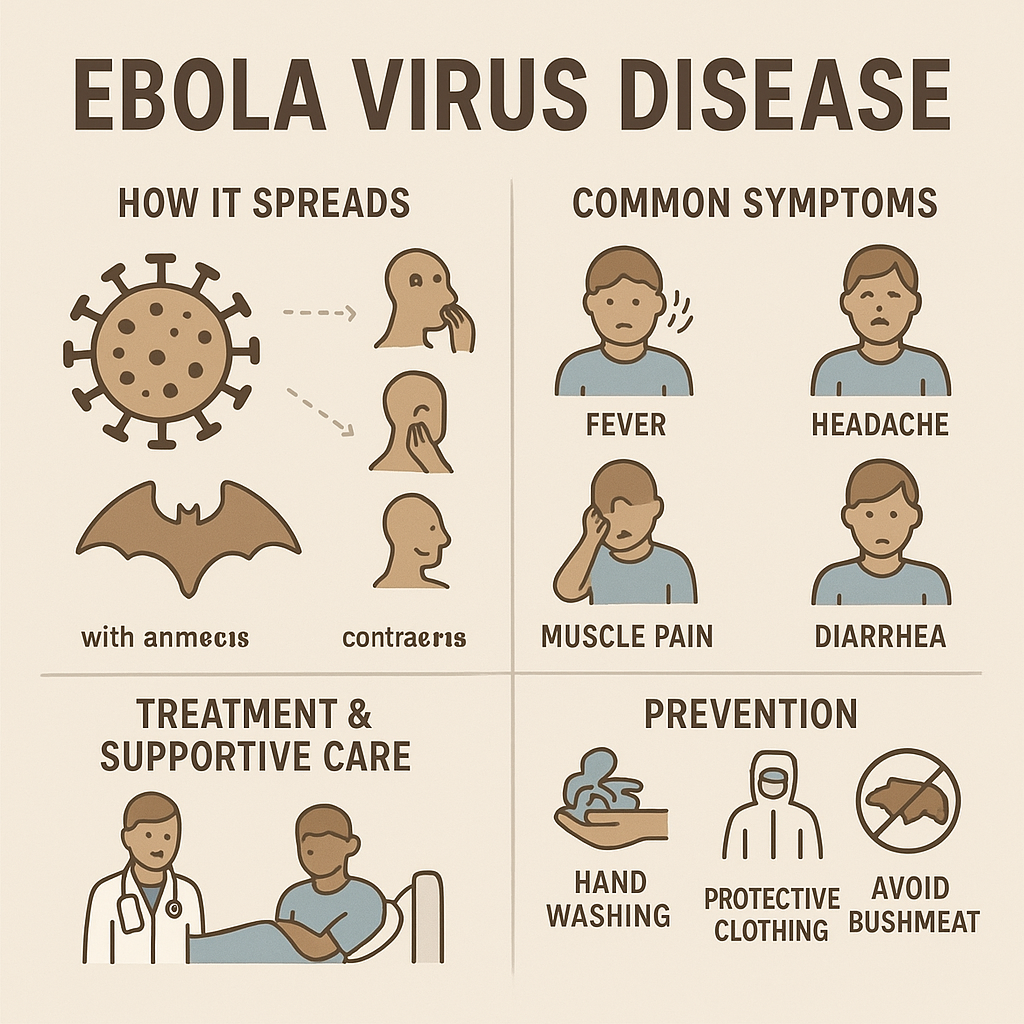
The illness first came to international attention after outbreaks in 1976. Since then, outbreaks have occurred mainly in parts of central and western Africa. That history does not mean Ebola is a problem of a particular people or a fixed region. It means the animal hosts, local ecology, travel patterns, health services, and outbreak-detection conditions have contributed to where cases have been identified. Investigations have implicated fruit bats as likely natural hosts, but the exact ecological pathways from wildlife to people remain an area of study.
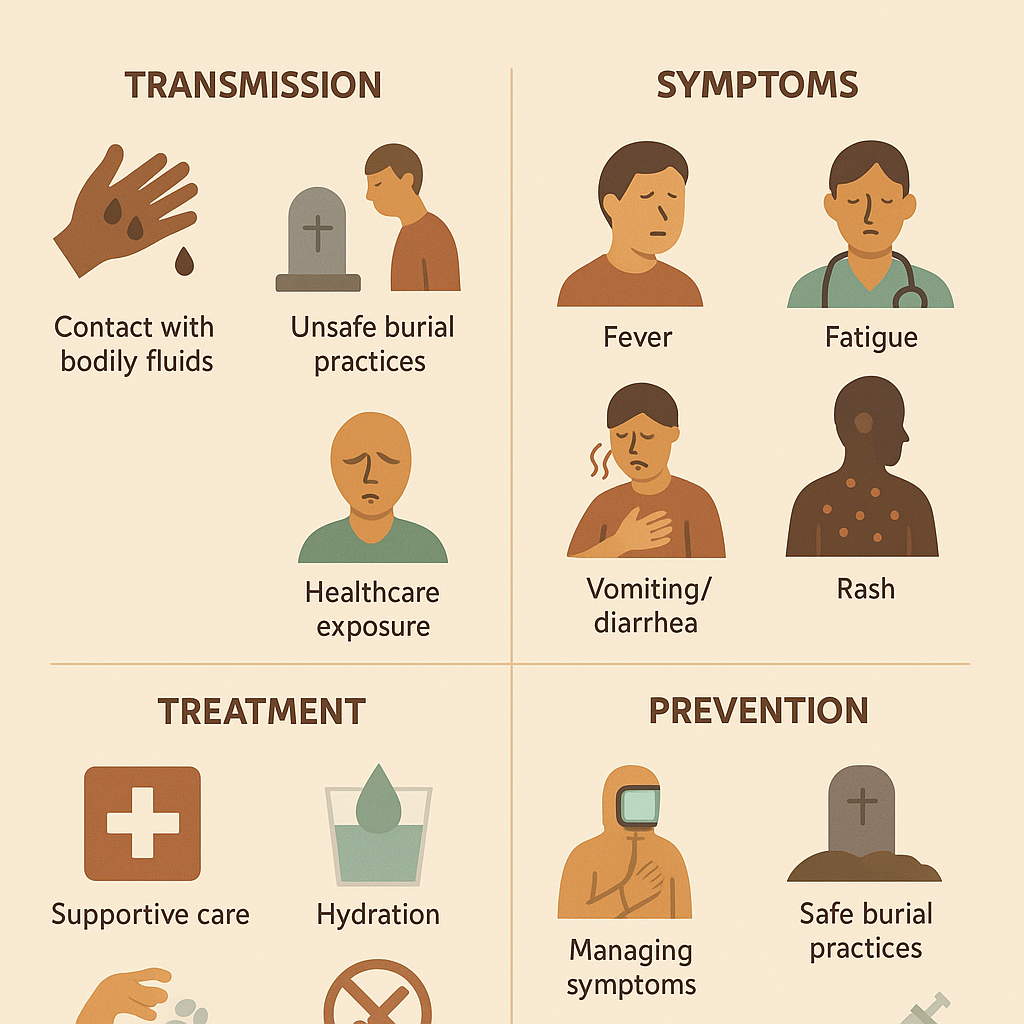
After infection, symptoms usually begin between 2 and 21 days later. Early signs can include fever, fatigue, headache, muscle pain, and sore throat—symptoms shared by many infections, which is why exposure history matters. Later illness may involve vomiting, diarrhea, rash, impaired kidney or liver function, and bleeding. Bleeding can occur, but it is not present in every patient and should not be treated as Ebola’s defining first sign. Frankly, the familiar image of sudden dramatic bleeding is a poor guide to recognizing the disease.
Ebola can damage several body systems and lead to fluid loss, shock, and organ dysfunction. The risk of death varies by outbreak, virus species, patient circumstances, and access to timely supportive care. The World Health Organization’s Ebola fact sheet describes an average case-fatality rate around 50%, with past outbreaks ranging roughly from 25% to 90%. A range is not a prediction for any one person. It is a warning against turning the worst reported outcome into a universal statistic.
Why Accurate Ebola Information Matters
Knowing how Ebola spreads helps people respond to genuine risk without treating every ordinary interaction as dangerous. Transmission generally requires contact with infectious body fluids—such as blood, vomit, diarrhea, urine, breast milk, semen, or other fluids—or with objects contaminated by those fluids. Risk rises when a person is ill, especially when symptoms are severe, and when someone handles a patient’s fluids without proper protective equipment. Routine proximity, sharing a room, or passing someone in a public place is not the same as direct exposure.
This matters for families, health workers, and communities. Practical precautions—trained care, appropriate protective equipment, safe cleaning, and careful handling of contaminated materials—can interrupt transmission. Public-health teams also monitor contacts, arrange testing, and provide clear instructions. In outbreaks, trust is not a soft extra: people are more likely to seek help and follow precautions when information is respectful, comprehensible, and connected to services they can actually reach.
The disease also has a serious medical dimension beyond infection control. Early care can support hydration, oxygenation, blood pressure, and the management of complications. For Zaire ebolavirus, specific monoclonal antibody treatments have been used; what is available and appropriate depends on the virus and local clinical guidance. Vaccines have been used to help prevent disease from Zaire ebolavirus, including in outbreak response, but protection should not be assumed against every orthoebolavirus. These tools complement, rather than replace, rapid diagnosis and careful clinical care.
A useful comparison is with seasonal influenza, another infection that can cause severe illness but spreads more readily through respiratory particles in everyday settings. The comparison is not a contest over which disease is “worse.” It shows why transmission route changes the response: Ebola control focuses on identifying cases, protecting caregivers, managing body fluids safely, and tracing contacts; influenza prevention also relies heavily on respiratory precautions and vaccination. When I compare outbreak guidance, that difference is more useful than a frightening headline number.
There is a human reason to get the facts right, too. People who are ill deserve dignity, privacy, and effective treatment; their families deserve support, not blame. Caring for health is a form of stewardship, and that includes protecting others without reducing patients or whole communities to a source of danger.
What to Do: A Step-by-Step Guide to Exposure and Prevention
- Check whether there was a real exposure. Ebola risk is tied to contact with an infected person’s blood or body fluids, contaminated materials, or certain infected animals. Travel to an area with an active outbreak can be relevant, but travel alone does not mean a person has Ebola. Health authorities assess the location, timing, and nature of contact. Do not diagnose yourself from a symptom list; fever and fatigue have many common causes.
- Call before going to a clinic if exposure is possible. If you have a known or suspected exposure, contact local public-health authorities, emergency services, or a healthcare provider by phone and follow their directions. Tell them where and when the contact occurred and whether symptoms have started. A call ahead allows staff to prepare the right precautions and direct you to suitable care. Do not arrive unannounced at a crowded waiting room if you have been told to seek assessment.
- Act promptly if symptoms develop. Fever, weakness, headache, muscle aches, sore throat, vomiting, or diarrhea after a possible exposure needs urgent professional assessment. Symptoms commonly begin 2 to 21 days after exposure, but that window is not a reason to self-monitor alone after a high-risk contact. Follow public-health instructions about movement, transport, and contact with others. Do not attempt home treatment as a substitute for evaluation.
- Avoid contact with other people’s body fluids. Do not touch blood, vomit, diarrhea, or other bodily fluids from a suspected or confirmed case, and do not handle clothing, bedding, needles, or medical equipment that may be contaminated. Care should be provided by trained personnel using recommended protective equipment and procedures. Improvised gloves or a face covering are not a replacement for clinical infection-control training.
- Use safe, respectful care and cleaning procedures. Healthcare teams follow protocols for protective equipment, hand hygiene, waste, laundry, and cleaning. Families should ask trained local responders what they can safely do rather than guessing. Traditional burial practices can involve close contact with the deceased, and a person who died of Ebola may remain infectious; culturally respectful, safe burial services can protect mourners while honoring the dead. Blame does not improve safety. Practical support does.
- Follow contact monitoring instructions. Public-health teams may monitor people who had a relevant exposure for 21 days after their last contact. Monitoring is not a declaration that someone is infected; it is a way to notice symptoms quickly and arrange care. Keep appointments, answer follow-up calls, and report symptoms immediately. If you are told to limit certain activities, ask exactly what is restricted and for how long.
- Rely on current local guidance. Outbreak recommendations can change as investigators learn more, and rules differ according to the virus, the exposure, and local services. Check updates from the health ministry, the WHO, or the CDC rather than passing along unverified posts. If travel is planned to an outbreak area, consult official travel-health advice and follow local directions. Good preparation is specific, calm, and evidence-based—not panic buying or blanket avoidance of people from a region.
Ebola Compared With Seasonal Influenza
The table below compares Ebola with seasonal influenza as a useful contrast in how infectious diseases spread. It does not suggest the illnesses have identical effects or that one simple statistic can measure overall danger. Ebola outbreaks are assessed case by case; influenza circulates widely and changes from season to season.
| Feature | Ebola virus disease | Seasonal influenza |
|---|
| Main transmission route | Direct contact with infectious body fluids or contaminated objects | Primarily respiratory particles released by an infected person |
| Ordinary casual contact | Not considered a typical route of spread without relevant exposure | Can spread during close everyday contact, especially indoors |
| When contagious | People are generally not contagious before symptoms; risk is associated with illness and infectious fluids | People may spread flu shortly before symptoms and while sick |
| Typical outbreak response | Case identification, isolation, protective equipment, safe care, contact monitoring | Vaccination, staying home when sick, respiratory hygiene, and clinical care |
| Fatality figures | Case-fatality rates have varied widely; WHO reports an average near 50% across outbreaks | Risk varies greatly by season, age, health, and vaccination; no single figure applies to everyone |
| Specific prevention tools | Vaccines are available for Zaire ebolavirus; use depends on outbreak guidance | Seasonal vaccines are updated and recommended for many people |
The practical lesson is simple: disease-control plans should match the way a disease actually spreads. Ebola does not call for treating every passing encounter as a likely exposure, while a suspected body-fluid contact deserves prompt attention. Influenza spreads through routine respiratory exposure more readily, so everyday prevention advice differs. Neither comparison should be used to dismiss symptoms or to make a diagnosis without qualified medical advice.
For additional detail on transmission and prevention, see the CDC’s explanation of how Ebola spreads and its Ebola prevention guidance.
Common Mistakes to Avoid
Repeating the 80–90% figure as a universal death rate. That range has been reported in particular outbreaks, but it is not the fate of every patient or the average for all cases. The WHO cites an average case-fatality rate around 50%, with substantial variation. Outcome depends on several factors, including the outbreak, virus, and availability of care. Numbers without context frighten people without helping them act.
Calling Ebola airborne. Ebola is not understood to spread like measles or influenza through ordinary shared air. The main established route is direct contact with infectious body fluids or contaminated materials. Healthcare teams still use extensive protective measures, and specific clinical procedures may require additional precautions. That does not justify telling the public that casual breathing near an infected person is the usual route of transmission. Precision matters.
Assuming every patient bleeds. Bleeding can occur, particularly in severe disease, but many early symptoms are nonspecific and external bleeding is not a reliable screening test. Waiting for dramatic signs can delay care. If there has been a plausible exposure, follow public-health directions even if the symptoms seem mild—or even if symptoms have not begun yet.
Blaming “cultural practices” or a whole continent. Outbreaks can be affected by healthcare access, diagnostic capacity, conflict, misinformation, trust, transport, and the timing of detection. Caregiving and burial customs can involve close contact, but communities are not problems to be corrected from a distance. Public-health measures work better when local leaders, clinicians, families, and responders shape them together. Stigma can drive sick people away from care and make an outbreak harder to control.
Treating vaccines or medicines as universal protection. Ebola viruses are not all interchangeable. A vaccine or antibody treatment developed for Zaire ebolavirus should not be assumed to protect against every virus in the group. The right intervention depends on the strain and current clinical guidance. People should not seek unapproved products or postpone assessment because they believe they are protected.
Sharing unverified outbreak claims. Old figures, recycled images, and rumors can cause unnecessary fear. Before reposting a claim, check whether it comes from a health ministry, WHO, CDC, or a named clinical authority, and whether it refers to a current outbreak. During an emergency, stale information can be worse than no information because it sends people toward the wrong action.
Frequently Asked Questions
Can Ebola spread through the air?
Ebola is not known to spread through the air in ordinary everyday interactions in the way respiratory illnesses such as influenza do. The main route is direct contact with the blood or other body fluids of a person who is sick with Ebola, or with objects contaminated by those fluids. Healthcare workers follow specific infection-control procedures, including additional precautions when appropriate. If you think you had a meaningful exposure, ask public-health officials for an assessment rather than relying on a general rule.
What is the Ebola fatality rate?
There is no single rate that accurately describes every outbreak or every patient. The World Health Organization reports that case-fatality rates have varied from about 25% to 90%, with an average around 50%. Differences in virus species, outbreak conditions, access to timely care, and how cases are counted all matter. A population-level figure cannot predict an individual outcome, and prompt medical care is important.
How long after exposure can Ebola symptoms begin?
Symptoms usually appear 2 to 21 days after exposure. People are generally not contagious before symptoms begin, but anyone with a known or suspected exposure should follow the instructions of public-health officials, including any monitoring period. Do not wait for a particular symptom or for the 21-day period to pass if illness develops; call for medical advice promptly and explain the exposure history.
Is there a vaccine or treatment for Ebola?
Yes, but the details depend on the virus species and the outbreak. Vaccination has been used to help prevent disease caused by Zaire ebolavirus, and specific monoclonal antibody treatments have been used for that virus. Other forms of Ebola virus disease may not have the same licensed products or treatment options. Patients also need supportive medical care. Health authorities and clinicians determine which interventions are appropriate; this is not a situation for self-treatment.
Final Thought
Ebola deserves serious attention, not theatrical certainty. The useful response is to know the actual transmission route, seek expert help after a plausible exposure, and protect patients and caregivers with sound infection control. Communities facing outbreaks need accessible medical care, trustworthy information, and support—not blame. Health is worth protecting, and the best protection begins with facts that are accurate enough to guide action and humane enough to keep people connected to care.
Sources: World Health Organization, Ebola virus disease; U.S. Centers for Disease Control and Prevention, Ebola information, transmission guidance, and prevention guidance; National Institute of Allergy and Infectious Diseases, Ebola overview.
FAQPage JSON-LD