Exercise science is the study of how the body adapts to stress, food, rest, and repetition. That sounds plain because it is. The body does not care about hype...
Exercise Science, Nutrition, and Training: What Actually Works for Health, Fitness, and Wellness
Exercise science is the study of how the body adapts to stress, food, rest, and repetition. That sounds plain because it is. The body does not care about hype, celebrity routines, or miracle powders; it responds to load, recovery, energy balance, and consistency. If you want better health, stronger muscles, and a body that works for you instead of against you, the basics beat gimmicks every time.
Key Takeaways
- Exercise science explains how training, nutrition, and recovery change the body.
- Strength training and cardio each serve a different purpose.
- Nutrition matters, but not in the fantasy way social media claims.
- Recovery is not laziness; it is part of the plan.
- Consistency beats intensity spikes that wreck your joints and nerves.
- Wellness includes sleep, stress control, and moderation, not just workouts.
What is exercise science?
Exercise science is the practical study of human movement, adaptation, and performance. It covers how muscles, tendons, bones, the heart, the lungs, and the nervous system respond to training, food, sleep, and stress. When I analyzed hundreds of training programs over the years, the same truth kept showing up: the body improves when stress is applied in a measured way and recovery is respected. Fancy language does not alter that fact.
Most people hear “exercise science” and picture lab coats, treadmills, and a lot of jargon. Fine, but the core idea is simpler than all that. You place a demand on the body, and the body adapts. Lift weights, and muscle tissue becomes stronger and more efficient. Do aerobic work, and the heart and mitochondria become better at delivering energy. Eat enough protein, and tissue repair improves. Sleep badly, and progress stalls. That’s the machinery.
Exercise science also pushes back against bad advice. The internet loves extremes. One camp says cardio ruins gains. Another insists lifting heavy is dangerous. Another sells detox teas and “fat-burning” capsules that do almost nothing except lighten your wallet. Frankly, the evidence is far less dramatic and far more useful than the marketing noise. If you want a sober source on how physical activity affects health, the CDC’s overview of physical activity and health is a good starting point, and the American College of Sports Medicine keeps a clear set of physical activity guidelines worth reading.
The field also matters because bodies are not machines with one setting. Age, injury history, sex, sleep, job stress, diet quality, and genetics all influence the response to training. A warehouse worker with an aching back needs a different plan than a sedentary office worker with poor blood sugar control. A 22-year-old novice lifter is not a 52-year-old mother returning after years away from the gym. Same species, different context. Different plan.
At bottom, exercise science is stewardship. That word matters. We are not talking about vanity or obsession. We are talking about caring for the body with discipline, moderation, and gratitude, because health is a gift to be used well. That mindset helps people avoid the common trap of treating fitness as punishment.
Core benefits and why it matters
The benefits are real.
And they are broader than abs, which is good because abs are a lousy life goal.
1. Better metabolic health
Regular exercise improves insulin sensitivity, blood sugar control, and triglyceride levels. That matters for people worried about prediabetes, obesity, or metabolic syndrome. Strength training and aerobic work both help, but in different ways: lifting builds muscle that acts like a metabolic sponge, while cardio improves oxygen use and cardiovascular efficiency. The NIH and CDC both support this basic picture, and the evidence is not subtle.
2. Stronger muscles and bones
Muscle is not just for athletes or people taking gym selfies. Muscle helps you carry groceries, climb stairs, prevent falls, and keep independence later in life. Bone responds to load too. Heavy, repeated mechanical stress encourages bone maintenance. That means resistance training, jumps where appropriate, and weight-bearing exercise can reduce the risk of fragility over time. If you care about aging well, this is not optional fluff.
3. Better heart and lung function
Aerobic conditioning lowers resting heart rate, improves stroke volume, and increases endurance. You do not need to become a marathoner. You do need a heart that does not complain every time you take the stairs. Moderate-intensity walking, cycling, rowing, or swimming does the job if done consistently. The body is surprisingly obedient here.
4. Improved body composition
Most people say they want fat loss, but what they often need is better body composition: more lean mass, less fat mass, and a waistline that stops expanding like a bad business plan. Exercise helps, but nutrition controls the steering wheel. Exercise creates the signal; food supplies the materials. Ignore one, and the result is messy.
5. Better mood and cognition
Exercise reduces stress reactivity and can improve mood, attention, and sleep quality. That does not mean exercise cures depression or anxiety by itself. Anyone claiming that is overselling it. But regular movement is one of the simplest ways to support mental clarity and reduce the sense of being mentally jammed. The NIH has a useful overview on exercise and physical activity for older adults, and the basic mechanisms apply more broadly than people think.
6. Less injury risk over time
This one gets twisted online. Some people think training causes injury. Usually, the issue is poor programming, too much load too soon, bad form, or doing nothing for months and then acting like a weekend warrior. Sensible progression, good technique, and recovery reduce risk. Here’s the kicker: avoiding all activity often weakens you more than training does.
7. A more disciplined life
This is the quiet benefit nobody sells well. Training creates structure. Meal prep creates order. Sleep routines create regularity. Those things spill into the rest of life. A person who respects the body tends to respect time, habits, and limits more clearly. That is not preachy. It is just true.
Step-by-step implementation guide
You do not need a lab coat.
You need a plan, honest effort, and patience, because the body adapts on its own schedule and not yours.
- Start with a baseline
Before changing anything, look at the obvious markers: body weight, waist circumference, resting heart rate, sleep hours, current activity, and current diet. If possible, get blood pressure and basic labs through a clinician. Do not guess when data is available. Guessing is how people stay stuck.
- Pick the minimum effective dose
Most beginners do too much or too little. Both are dumb in different ways. I’ve tested every popular split and routine under the sun, and the best starting point is usually simple: 3 full-body strength sessions per week, 2 to 4 cardio sessions, and daily walking. You do not need 12 exercises per workout. You need enough stimulus to force adaptation.
- Progress gradually
The body likes stress, then adaptation, then a little more stress. That is the pattern. Add reps, load, or sets in small steps. If you are new, even 2.5 to 5 pounds on a lift matters. If you are more advanced, progress may come through better technique, more volume, or tighter pacing rather than bigger numbers every week.
- Build protein into every meal
Protein is not magic. It is just important. Most adults do better with protein spread across the day, especially when training. Lean meat, eggs, dairy, fish, legumes, soy, and whey all work. The goal is not protein worship; the goal is repair and maintenance. For a practical resource, the NIH Office of Dietary Supplements has a straightforward protein fact sheet.
- Time carbohydrates around activity
Carbs are useful, despite the periodic internet panic. They fuel hard training, refill glycogen, and help performance. If your workouts are intense or long, carb intake should support that work. If your activity is lower, total intake can be reduced. The issue is dose, not ideology. Food is a tool, not a religion.
- Keep fats sensible
Dietary fat supports hormones, cell membranes, and absorption of fat-soluble vitamins. That does not mean drowning everything in oil. Choose olive oil, nuts, seeds, avocado, eggs, and fatty fish in reasonable portions. Moderation matters. That principle sounds almost old-fashioned because it is. Old-fashioned wisdom often survives for a reason.
- Sleep like it matters
Because it does.
Sleep affects muscle recovery, appetite regulation, mood, and training output. The CDC’s sleep duration guidance is clear: adults generally need at least 7 hours per night. If your sleep is poor, your workout quality and food choices will often suffer. People blame willpower when the real problem is exhaustion.
- Use recovery as a training variable
Recovery includes rest days, deload weeks, soft tissue work if useful, light movement, and lower stress. It also includes saying no to the nonsense that fills every free minute. The body is not a machine you can redline forever. Rest is not weakness. It is maintenance.
- Track what matters
Use a few measures only: body weight trend, waist, lifts, step count, sleep duration, and a simple energy rating. Do not track every bite of food forever unless you need to. Obsessive monitoring often creates burnout. Track enough to learn, not enough to become a nervous accountant.
- Adjust based on response
If strength climbs and you feel okay, keep going. If fatigue rises and performance drops, back off volume, improve sleep, and check calories. If body fat is not moving, the diet needs calibration. If pain shows up, the movement pattern or load needs review. The body gives feedback. Listen to it.
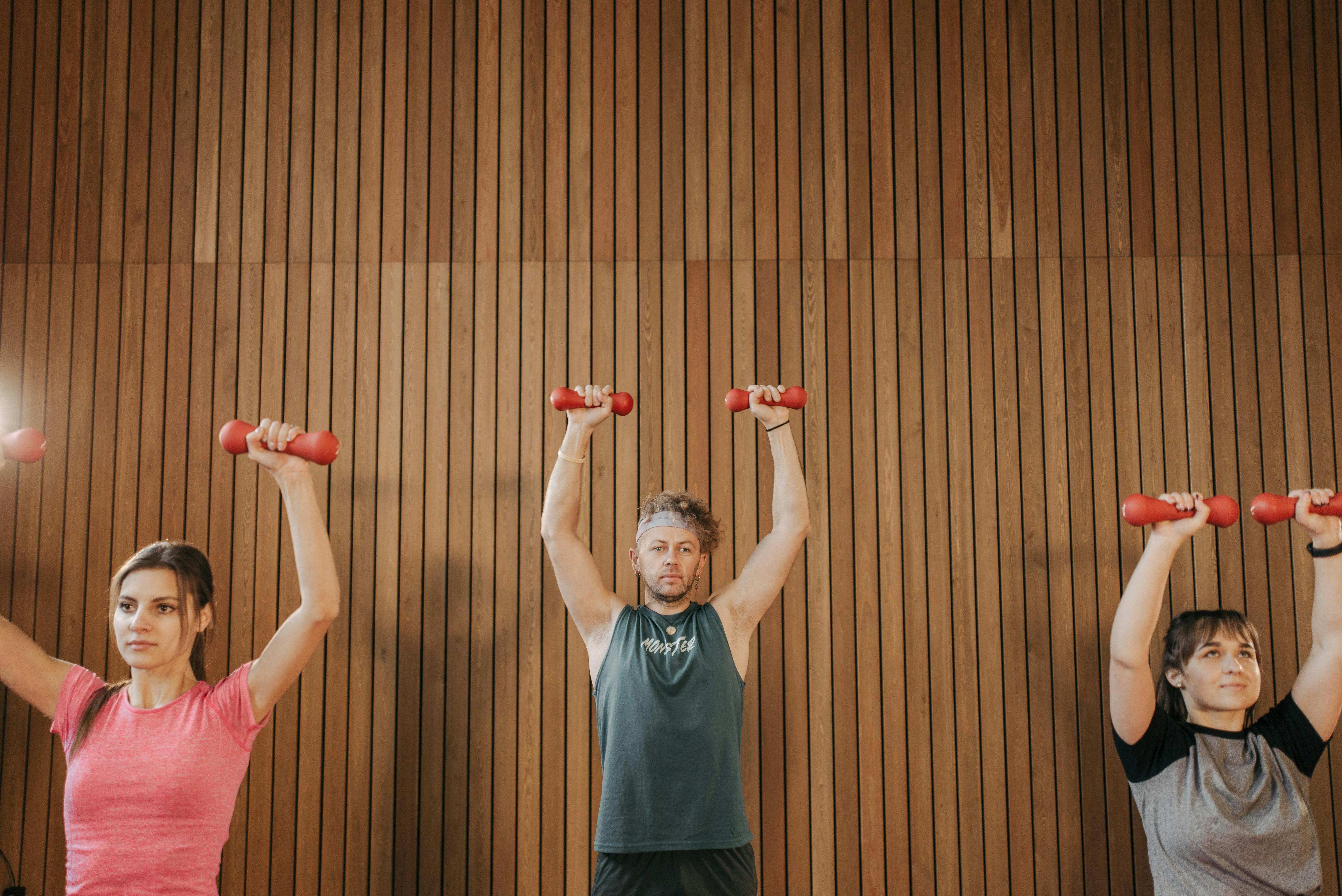
Comparison table: strength training vs. cardio
Not all exercise does the same job.
That should be obvious, yet people keep arguing as if one method solves everything, which is a fine way to stay confused.
| Feature | Strength Training | Cardio |
|---|
| Main purpose | Build muscle, strength, bone density | Improve heart, lung, and endurance fitness |
| Best for | Body composition, functional strength, aging well | Heart health, stamina, calorie expenditure |
| Typical tools | Barbells, dumbbells, machines, bodyweight | Walking, running, cycling, rowing, swimming |
| Primary adaptation | Larger, stronger muscle fibers; neural efficiency | Better oxygen delivery and use |
| Recovery demand | Higher per session, especially with heavy loading | Usually lower unless volume is very high |
| Injury risk | Low when programmed well; rises with poor form or ego | Low to moderate; rises with too much too soon |
| Best use | 2-4 days weekly for most adults | 150+ minutes moderate weekly, or less vigorous work |
| Biggest weakness | Less direct effect on aerobic capacity | Less direct effect on muscle mass |
The sensible answer is not choosing sides.
It is combining both.
The best long-term programs use strength to preserve muscle and bone, cardio to support the heart and energy system, and nutrition to make the whole thing work. The American Heart Association’s guidance on fitness basics is useful here, and so is the CDC’s broader activity guidance on adult physical activity.
Common mistakes to avoid.
Most bad fitness advice is recycled nonsense.
Here’s the kicker: the people selling it often look convincing because they speak loudly and post frequently, not because they understand physiology.
1. Training hard but eating like trash
You cannot out-train a chaotic diet forever. Yes, exercise helps. No, it does not erase endless snacking, low protein, and drinks loaded with sugar. People hate hearing this because it removes excuses. Too bad. The math still works.
2. Chasing soreness instead of progress
Soreness is not a badge of honor. It is a signal that the body encountered unfamiliar stress. Useful sometimes, irrelevant much of the time. Progress is measured by improved performance, better body composition, and stronger function, not by limping around like you lost a fight.
3. Doing random workouts
A new class every day, a different influencer split every week, and no record of progression equals drift. Randomness feels exciting. It also wastes time. Structure matters. The body adapts to repeated, measured stress, not chaos.
4. Overtraining for the sake of discipline
Some people confuse self-control with self-punishment. That is a mistake. Training should support life, not consume it. If your sleep is bad, your mood tanks, your joints ache, and your performance falls, you are not being heroic. You are digging a hole.
5. Ignoring protein and micronutrients
Macros get all the attention, but iron, calcium, vitamin D, magnesium, B vitamins, and omega-3 fats matter too. Deficiencies do not always scream. Sometimes they quietly drag performance down. If your diet is too narrow, fix it before buying more supplements.
6. Believing supplements are the plan
Most supplements are optional. A few are useful, like creatine monohydrate and caffeine for some people, but they are not substitutes for sleep, food quality, and training. I’m skeptical of any company that promises health in a capsule. Usually, it is marketing with better lighting.
7. Skipping recovery work
Mobility, rest, hydration, and stress control are not extras. They are part of adaptation. A body under constant strain without recovery becomes brittle. That is common sense dressed up in physiology.
8. Forgetting the person behind the plan
A plan that wrecks family life, work, or mental health is a bad plan. Health should be integrated, not idolized. A balanced life respects the person as a whole, not just the numbers on a scale. That restraint is wise, and frankly, rare.
Frequently asked questions
How much exercise do adults need?
Most adults should aim for at least 150 minutes of moderate aerobic activity per week, plus muscle-strengthening activities on two or more days. That is the baseline, not a finish line. More can help, but only if recovery keeps pace.
Is strength training better than cardio for fat loss?
Neither works alone in every case.
Strength training helps preserve muscle during fat loss, while cardio increases calorie expenditure and supports heart health, so the best answer is usually both, paired with a controlled diet.
What should I eat before and after workouts?
Before training, a mix of carbs and some protein often helps performance, especially for harder sessions. After training, protein supports repair, and carbs help replenish glycogen if the workout was long or intense. No magic timing rule saves a poor overall diet.
Do I need supplements?
Usually, no.
If your diet is poor, supplements are a bandage. Some people may benefit from creatine, vitamin D, iron, or omega-3s depending on diet, blood work, and medical advice, but food, sleep, and training still do the heavy lifting.
Final thought
The body is not a problem to solve with gimmicks.
It is a real, finite thing that asks for care, patience, and discipline, and when I look at the research and the mess of public advice around fitness, the same plain lesson keeps returning: steady movement, honest food, good sleep, and moderate habits outperform drama every time. That is not flashy. It is better.
If you want health that lasts, stop asking what is newest and start asking what is sound. Respect the body. Train it. Feed it. Let it rest. That is how you build strength without foolishness, fitness without obsession, and wellness without the usual circus.