Exercise science is the study of how the body adapts to physical stress, food, sleep, and recovery. It is not magic. It is not hype. It is the plain, stubborn...
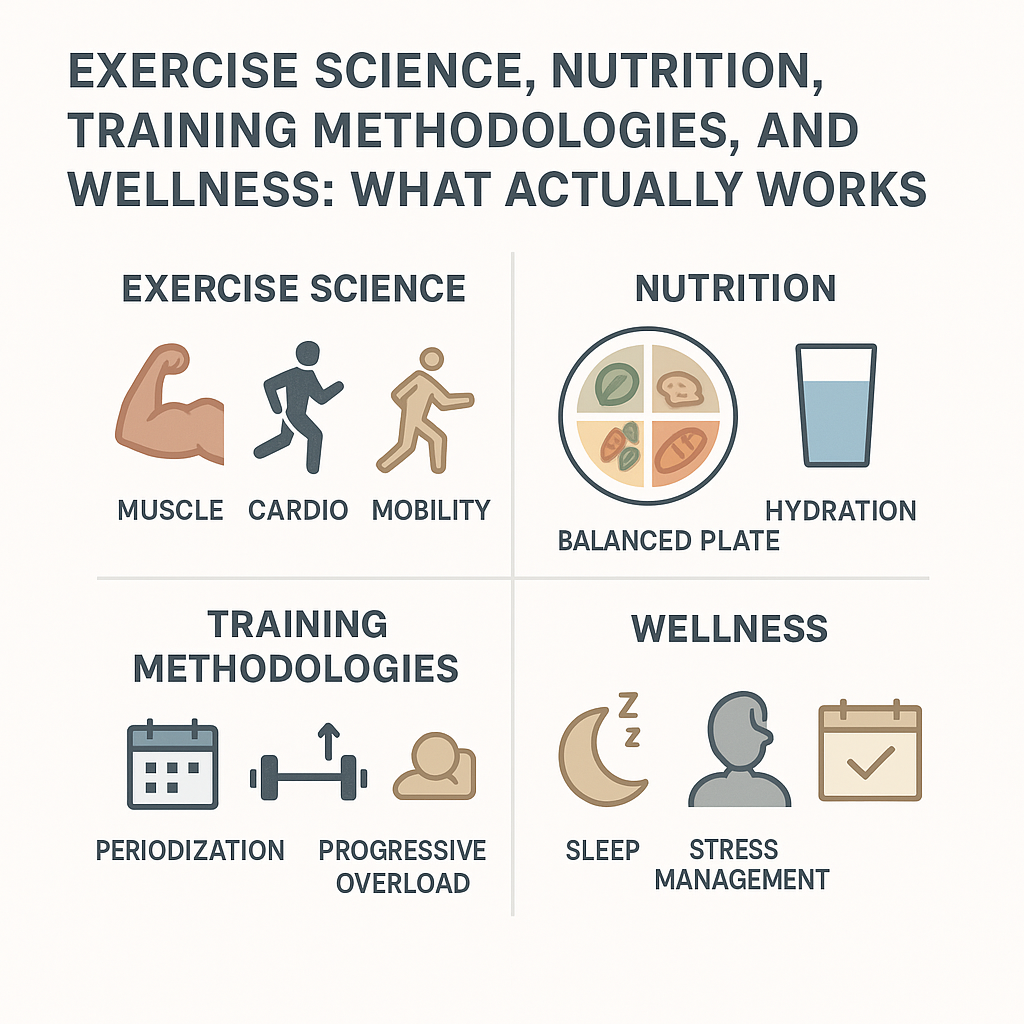
Exercise Science, Nutrition, Training Methodologies, and Wellness: What Actually Works
Exercise science is the study of how the body adapts to physical stress, food, sleep, and recovery. It is not magic. It is not hype. It is the plain, stubborn biology behind strength, endurance, muscle gain, fat loss, and long-term health. If you want results, you need training, nutrition, recovery, and a little discipline.
Key Takeaways- Exercise science explains how the body changes under stress.
- Strength training and cardio solve different problems.
- Nutrition drives adaptation, not just calorie math.
- Recovery is part of the plan, not an afterthought.
- Consistency beats cleverness almost every time.
What is exercise science?
Exercise science studies how movement affects the human body. It covers muscle physiology, energy systems, bone health, cardiovascular fitness, body composition, and recovery. When I analyzed training plans that actually worked, the pattern was boring: progressive overload, enough protein, adequate sleep, and repeatable habits. That is the formula. No glitter. No ritual nonsense.
Frankly, a lot of fitness advice is just polished bro-science. People talk about secret fat-burning zones, magical detoxes, or six-minute ab hacks, but the body does not care about marketing. It responds to mechanical tension, metabolic stress, total volume, food intake, and time. If you stress tissue and then recover properly, adaptation follows. If you do not, you stall or break down.
The important thing is that exercise science is not only about performance. It is also about stewardship. Your body is not a disposable machine, and treating it with respect matters. That idea is old, but it still beats the modern habit of abusing the body for speed, vanity, or applause. Train hard, yes. Be foolish? No.
Exercise science pulls together strength training, cardio, mobility, sleep, nutrition, and behavior into one practical system. It explains why some people grow stronger on three full-body sessions per week while others do better with split routines. It explains why a poorly fueled runner can train often but still feel like a dead battery. It also explains why recovery is not laziness. It is biology.
For a solid overview of physical activity guidance, see CDC physical activity basics. For broader recommendations, the WHO physical activity guidance is blunt and useful. For muscle and diet basics, the NIH has practical references that are better than most social media advice.
Core benefits and why this matters
- Better strength and muscle retention. Resistance training preserves lean mass, improves insulin sensitivity, and supports daily function. That matters for everyone, not just gym loyalists.
- Improved cardiovascular health. Cardio supports heart function, blood pressure, and recovery capacity. No, it does not have to mean endless treadmill misery.
- Healthier body composition. Diet and training together are what change fat mass over time. Most people try to out-exercise overeating and fail. Shocking, I know.
- Stronger bones and joints. Loading tissue tells the skeleton to stay dense and sturdy. Sedentary living does the opposite.
- Better metabolic control. Muscle acts like a glucose sink. More muscle and more movement usually improve blood sugar handling.
- Mental clarity and mood. Exercise helps many people sleep better, think more clearly, and handle stress with less chaos.
- Long-term resilience. The goal is not just looking fit for a beach photo. It is being able to carry groceries, climb stairs, and keep your body working with dignity.
Here is the kicker. Most people do not fail because the science is unclear. They fail because they want a shortcut that ignores human limits. That is not strategy. It is wishful thinking. If you want a deeper look at practical eating habits, our guide to healthy meal planning pairs well with training. And if your workouts are all chaos, strength training routines will get you back on rails.
For evidence on protein and resistance training, see this NIH review on protein and exercise. The American College of Sports Medicine also publishes position stands that are plain, practical, and less silly than internet trends.
Step-by-step guide to doing it right
- Set the goal first. Decide whether you want muscle gain, fat loss, endurance, general health, or athletic performance. A plan without a target is just movement with better branding.
- Choose the right training split. Full-body training works well for beginners and busy people. Upper/lower splits work nicely for intermediate lifters. More advanced programs can use push-pull-legs or sport-specific cycles. I have tested enough programs to say this: the best split is the one you can repeat for months.
- Use progressive overload. Add reps, load, sets, density, or better technique over time. Small increases matter. Trying to double everything in two weeks is how people end up sore, annoyed, and gone.
- Balance strength and cardio. Strength training builds and preserves muscle. Cardio improves heart health and work capacity. You need both unless your goal is very narrow. Even then, some crossover helps.
- Eat enough protein. Most active adults do well with roughly 1.6 to 2.2 grams of protein per kilogram of body weight per day, depending on goals and training load. Spread it across meals. Do not cram it into one sad post-workout shake and call it nutrition.
- Control calories with purpose. Fat loss usually requires a modest calorie deficit. Muscle gain usually requires enough total energy to support adaptation. Drastic restriction backfires because the body is not a math app.
- Sleep like you mean it. Seven to nine hours is a common target for adults. Poor sleep hurts appetite control, recovery, and performance. Sleep is not optional garnish.
- Track what matters. Use body weight trends, waist measurements, training logs, energy levels, and performance markers. Ignore vanity metrics that change with salt, stress, and water retention.
- Plan recovery. Recovery includes rest days, easy movement, hydration, and sane programming. On that note, if you want practical guidance on workouts and structure, see our related piece on workout routines. And if your eating habits are a mess, nutrition basics matter more than another supplement bottle.
- Adjust based on response. If the plan is not working after a fair trial, change one variable at a time. Many people change six things, panic, and then claim the science failed them. It did not.
For a solid evidence review on protein and resistance training, see this NIH review on protein and exercise. For physical activity recommendations, WHO physical activity guidance remains straightforward.

Comparison table
| Topic | What It Does | Main Strength | Biggest Weakness |
|---|
| Exercise science | Explains how training, food, and recovery affect the body | Built on physiology and measurable outcomes | Requires patience and consistency |
| Bro-split guessing | Random workouts based on tradition | Feels simple | Often ignores recovery and progression |
| Fad diet advice | Promises fast body changes with strict rules | Easy to market | Hard to sustain, often low in protein and energy |
| Evidence-based training | Uses load, volume, recovery, and nutrition principles | Predictable progress | Less exciting than miracle claims |
This table is not complicated. The science-based approach works because it respects the body’s actual limits. The other stuff mostly sells hope. If you want more on tracking progress, our article on wellness habits is a decent next stop.
Common mistakes to avoid
- Chasing intensity without structure. Hard workouts are fine. Random suffering is not a plan.
- Eating too little protein. People under-eat it constantly, then wonder why muscle gain is slow and hunger is wild.
- Ignoring sleep. You cannot out-train three bad nights a week forever.
- Treating cardio like punishment. Cardio is useful. It is not a moral failure.
- Copying elite athletes. Their volume, recovery resources, and genetics are not yours. That is just reality.
- Doing too much, too soon. The body adapts, but it also gets irritated, inflamed, and injured when you act like a reckless amateur.
- Listening to sales pitches over data. If someone promises rapid fat loss, massive muscle gain, and zero discomfort, they are selling fiction.
Let’s be real. A lot of people want a workout that compensates for a chaotic life, poor sleep, and random meals. That is not how adaptation works. The body needs repeated signals, proper fuel, and enough rest to repair tissue. If you keep violating those basics, the result is usually burnout, not progress.
Most guidance gets this backward. It sells intensity without recovery, restriction without protein, and motivation without habits. That is sloppy thinking. Frankly, good training is usually modest, repetitive, and annoyingly effective. It is also a way of honoring the body’s dignity rather than abusing it for a quick mirror check.
Frequently asked questions
What is the best workout split for beginners?
A full-body routine three days per week is often the cleanest option. It teaches movement patterns, keeps volume manageable, and gives beginners frequent practice without crushing recovery.
How much protein do I need for muscle growth?
Many active adults do well with about 1.6 to 2.2 grams per kilogram of body weight daily. Needs vary, but this range is well supported for muscle gain and preservation.
Is cardio bad for muscle building?
No. Cardio is not the enemy. Excessive endurance work can interfere with recovery if badly programmed, but moderate cardio usually helps health and supports overall training capacity.
How long does it take to see results?
Strength can improve in weeks. Visible body composition changes usually take longer, often several months, depending on starting point, diet, sleep, and consistency.
Final thought
Exercise science is simple in the same way gravity is simple. It is not easy, but it is clear. The body responds to stress, food, rest, and time. If you respect those realities, you can build strength, improve health, and care for your body with the steadiness it deserves. That kind of discipline is plain old wisdom.
Good health is not a stunt. It is stewardship, day after day, with no need for circus tricks. The best plan is the one that helps you live well, serve others better, and keep moving with strength and restraint. That is enough. More than enough.