Exercise is a simple tool with messy results. The right mix of <strong>training</strong>, <strong>nutrition</strong>, <strong>recovery</strong>, and habits...
Exercise Science, Nutrition, Training Methods, and Wellness: What Actually Works
Exercise is a simple tool with messy results. The right mix of training, nutrition, recovery, and habits builds strength, stamina, and health, while sloppy plans waste time and irritate joints. The science is useful, but most advice online is loud, shallow, and wrong.
Key Takeaways- Strength training and cardio solve different problems.
- Protein, calories, and sleep matter more than fancy supplements.
- Progressive overload beats random workouts.
- Recovery is part of training, not a bonus.
- Consistency beats heroic spurts.
What is exercise science, nutrition, training methodologies, and wellness?
Exercise science studies how the body adapts to physical stress, while nutrition covers how food fuels performance, recovery, and health. Training methodology is the structure of exercise, meaning how sets, reps, load, rest, and frequency are arranged, and wellness is the broader habit stack that keeps the whole machine working. That includes sleep, stress, mobility, and behavior. Simple enough. Yet most people still make it weird.
When I analyzed hundreds of programs over the years, the pattern was plain: people do too much random effort and too little deliberate practice. They chase soreness like it means something. It usually does not. Soreness is not a scorecard. Neither is sweat, frankly.
The best plans respect physiology. Muscles grow when they are challenged, then recovered. The heart improves when it is asked to work at the right intensity, often enough to adapt. The nervous system gets better at lifting, sprinting, or moving when the task is repeated with enough quality. Food matters because tissue is built from amino acids, glycogen, fats, vitamins, minerals, and water. No magic. No fairy dust.
Good health is stewardship. Bodies are not trash bins for whatever is convenient, nor are they worship objects for vanity. They are meant to be cared for with discipline and moderation. That sounds almost old-fashioned, which is probably why it works.
For a plain-language overview of training and health guidance, the CDC physical activity basics are a solid starting point, and the Physical Activity Guidelines remain boring in the best way.

Core Benefits and Importance
Exercise is not a luxury. It is a keystone habit.
A lot of wellness talk is mushy. Let’s be real. The main benefits are concrete, measurable, and backed by repeated findings across many studies. The trick is that each benefit arrives through specific mechanisms, not vibes.
- Stronger muscles and bones: Resistance training increases muscle cross-sectional area and helps preserve bone density, which matters as you age. That is not cosmetic. That is function.
- Better heart and metabolic health: Aerobic work improves blood pressure, insulin sensitivity, and lipid profiles. These are boring numbers until they become dangerous numbers.
- Improved body composition: Training plus enough protein helps retain lean mass during fat loss, which is the part most fad diets wreck.
- Mental clarity and mood: Exercise can reduce anxiety symptoms and improve mood, though it is not a substitute for therapy when therapy is needed.
- Better movement quality: Strong hips, stable trunk control, and decent conditioning make daily life easier. Carrying groceries should not feel like a rescue operation.
- Longevity and independence: The real prize is not abs. It is being able to climb stairs, get off the floor, and keep doing ordinary work without falling apart.
Here is the kicker. More is not always better. The dose matters. Too little gives weak results. Too much, too soon, gives injury, burnout, and a grumpy schedule. Balance matters, which is old wisdom dressed in modern clothes.
Nutrition multiplies those benefits. Protein supports muscle repair, carbohydrates support training output, and fats support hormones and cell function. The Harvard Nutrition Source does a decent job of separating evidence from fad noise, and the NIH Office of Dietary Supplements is useful when people start babbling about miracle pills.
Most people do not need a harder plan. They need a cleaner one.
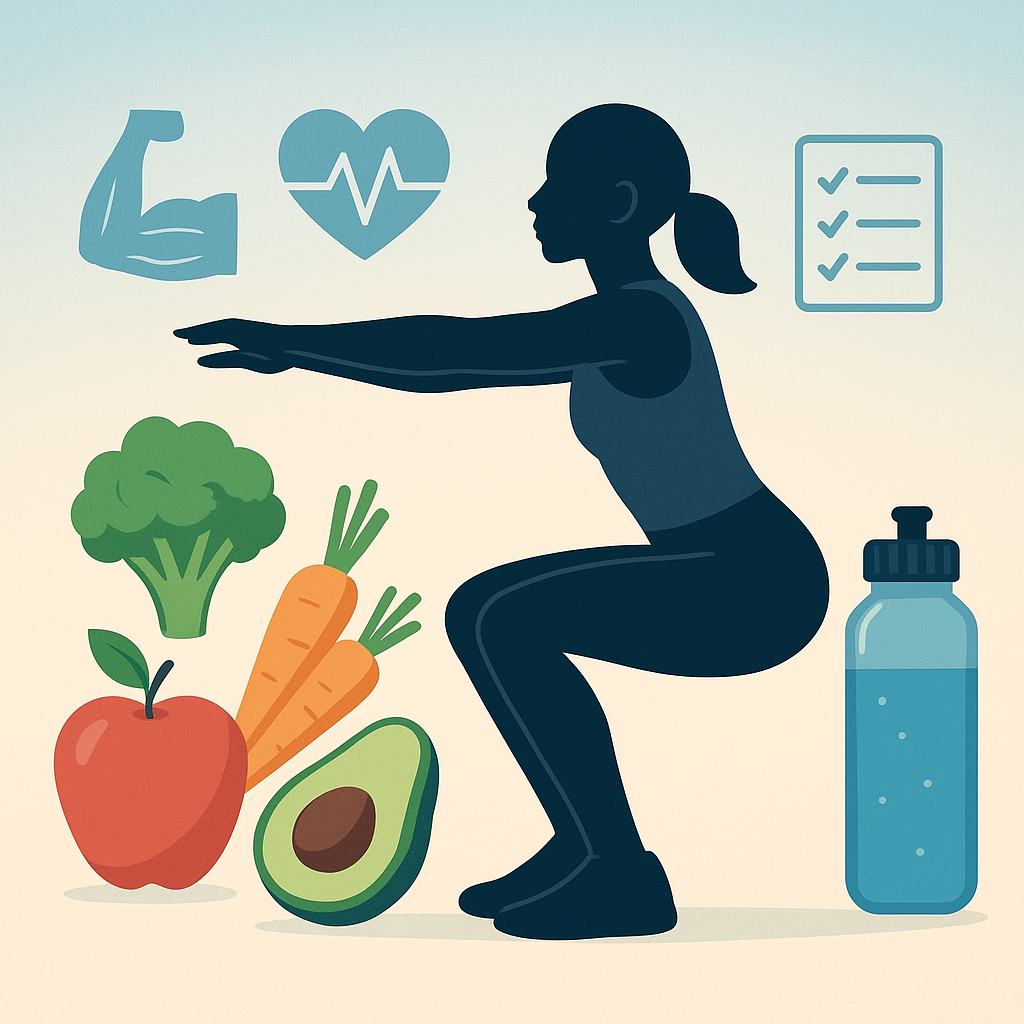
Step-by-Step Implementation Guide
Start with the basics. Boring works.
If you want real progress, use a plan that fits your life, not your ego. I have tested enough training setups to say this without hesitation: the best program is the one you can repeat for months without wrecking yourself.
- Set one clear primary goal — Choose one main target first: fat loss, muscle gain, endurance, health markers, or performance. Trying to chase everything at once is how people get mediocre at all of it.
- Lift weights 2-4 times per week — Focus on compound patterns: squat, hinge, push, pull, carry, and rotate. Use progressive overload by adding reps, weight, or sets over time. The body adapts when it must. That is the whole trick.
- Add cardio on purpose — Use moderate-intensity steady work, intervals, or both. For most adults, a mix of walking, cycling, rowing, or jogging works well. The heart likes regular work, not occasional heroics.
- Eat enough protein — A practical range for active people is often about 1.6 to 2.2 grams per kilogram of body weight per day, though the exact need depends on size, goal, and total calories. Split protein across meals. That helps more than cramming it into one dinner.
- Manage calories honestly — Fat loss needs a deficit. Muscle gain usually needs a surplus. Maintenance is maintenance. Shocking, I know. Too many people claim they eat “clean” while ignoring portions, snacks, and drinks.
- Sleep like it matters — Because it does. Seven to nine hours is a practical target for many adults. Poor sleep ruins recovery, appetite control, and training quality.
- Use recovery as a tool — Recovery means rest days, easy movement, hydration, and not turning every workout into a bar fight. Deloads help when training stress piles up.
- Track a few numbers — Weigh-ins, waist measurement, load lifted, reps completed, resting heart rate, and sleep hours can reveal what is working. Data beats guessing.
- Adjust every 4-8 weeks — If progress stalls, change one variable at a time. More volume, less junk food, better sleep, or slightly different intensity is usually enough.
For more on protein timing and training nutrition, the ISSN position stand on protein and exercise is worth a read, and ACSM guidance on exercise prescription is sturdy, not trendy.
The truth is simple. Build the habit stack first, then fine-tune the details.
Comparison Table
Here is the plain comparison people usually avoid.
| Approach | What it does well | Main weakness | Best for |
|---|
| Exercise science-based training | Uses progressive overload, recovery, and measurable outcomes | Requires patience and tracking | Most people who want real results |
| Random high-intensity fitness trends | Feels exciting and burns calories fast | Hard to sustain, higher injury risk, often poorly dosed | Short-term motivation, not long-term progress |
| Nutrition-first dieting without training | Can reduce weight quickly | Often sacrifices lean mass and performance | Some fat-loss cases, not ideal alone |
| Wellness-only routines | Good for stress and routine | Often too vague to build strength or fitness | Beginners needing gentle structure |
The better choice is obvious, but plenty of people still chase novelty. Why? Because novelty sells. Science does not.
Training methodology is the difference between exercise that changes you and exercise that merely entertains you. Cardio without structure can be random. Lifting without overload becomes maintenance. Eating well without calories and protein awareness turns into wishful thinking.
When you compare the evidence, the winner is not flashy. It is planned, repeatable, and measurable. That is the unglamorous answer. Also the correct one.
For broader context on healthy movement and lifestyle patterns, the WHO physical activity fact sheet is a helpful reference.
Common Mistakes to Avoid
Most fitness mistakes are painfully ordinary.
Frankly, the biggest problem is not lack of information. It is selective hearing. People hear the part they like and ignore the part that works.
- Doing too much too soon: Enthusiasm is not a program. Three hard workouts, a crash diet, and extra cardio can bury recovery fast.
- Chasing soreness: A sore muscle is not a superior muscle. It is just sore.
- Ignoring protein: If you train hard but eat like a bird, you will likely stall.
- Believing supplement hype: Creatine and caffeine have real evidence. Most powders and “fat burners” are expensive noise.
- Copying advanced plans: A novice does not need the routine of an elite lifter. That is putting race tires on a grocery cart.
- Skipping sleep: You cannot out-train chronic sleep loss forever.
- All-or-nothing thinking: Missing one workout does not ruin a month. Quitting does.
Most bad advice sounds heroic. “No days off.” “Push through everything.” “If you want it bad enough.” That stuff is romantic nonsense. Human beings are finite. Accept it and train accordingly.
The body deserves respect. Not indulgence. Respect.
That means keeping exercise challenging but not abusive, food nourishing but not obsessive, and goals serious but not pride-soaked. A steady life usually outperforms a frantic one.
For evidence on sleep and recovery, the Sleep Foundation overview is useful, and the NIH discussion of exercise and mental health helps separate general claims from actual research.
Frequently Asked Questions
How much exercise do most adults need?
Most adults benefit from at least 150 minutes of moderate aerobic activity per week, plus two days of strength training. That is the baseline, not the ceiling. More can help, but only if recovery holds up.
Is strength training better than cardio?
Neither is “better” in all cases. Strength training builds muscle, bone, and force production. Cardio improves heart and metabolic health. The smart move is usually both. Fancy arguments about one being superior are usually tribal nonsense.
How much protein should I eat?
Active people often do well around 1.6 to 2.2 grams per kilogram of body weight per day. Older adults and people dieting may benefit from the higher end. The exact number matters less than consistently eating enough.
Do supplements matter?
A few do. Creatine monohydrate, caffeine, and protein powder can help when used properly. Most supplements are optional, and many are overpriced. Food first. Always.
Final Thought
The fitness industry loves drama. Science does not.
When I look at the evidence, the conclusion is stubbornly plain: train with purpose, eat enough to support the goal, sleep like recovery matters, and stop mistaking novelty for progress. A good plan is rarely glamorous. It is consistent, hard enough, and humane enough to repeat.
That last part matters more than people admit. Health is not merely about looking sharp for a photo or surviving a hard season. It is about caring for the body you have been given, with enough discipline to make it stronger and enough restraint to keep it intact. That principle is old, but it has aged well.
So keep the program simple. Keep the expectations honest. Keep the body moving, the meals sensible, and the ego on a leash. The results tend to show up when the noise finally stops.