Phone apps can track symptoms, but only if you use them carefully. They work best when you record real patterns, not random panic, because a symptom log is...
How Phone Apps Can Track Symptoms Without Fooling You
Phone apps can track symptoms, but only if you use them carefully. They work best when you record real patterns, not random panic, because a symptom log is meant to clarify what your body is doing, when it happens, and what seems to make it better or worse. Does that sound obvious? It should, yet most people use apps like confessional booths for every ache, twinge, and worry, then wonder why the result is noise instead of insight.
Key Takeaways
- Symptom-tracking apps are useful when they record timing, severity, triggers, and context.
- Apps do not diagnose disease; they help you spot patterns worth discussing with a clinician.
- The best logs are simple, consistent, and tied to concrete details like sleep, meals, activity, and medication.
- Too much recording can increase anxiety, so the goal is clarity, not obsession.
- A good app should support your health stewardship, not turn your phone into a cathedral of worry.
What is Symptom Tracking with Phone Apps?
Symptom tracking with phone apps means recording health complaints, daily habits, and possible triggers in a digital log. The basic idea is plain enough: you note what you feel, when it started, how severe it is, and what else was going on—food, exercise, sleep, stress, menstrual cycle, medication, or illness exposure. Simple tools, in other words.
The real value is not the app itself. It is the structure, because human memory is sloppy, especially when pain, fatigue, headaches, digestive trouble, or mood swings are involved, and the brain loves to rewrite yesterday into whatever feels most dramatic today.
I have looked at enough self-tracked logs to say this bluntly: most people either record too little or way too much. One camp writes, “felt bad,” which is useless. The other camp records every burp and blinking pattern, which is also useless. What matters is signal, not scrapbook clutter.
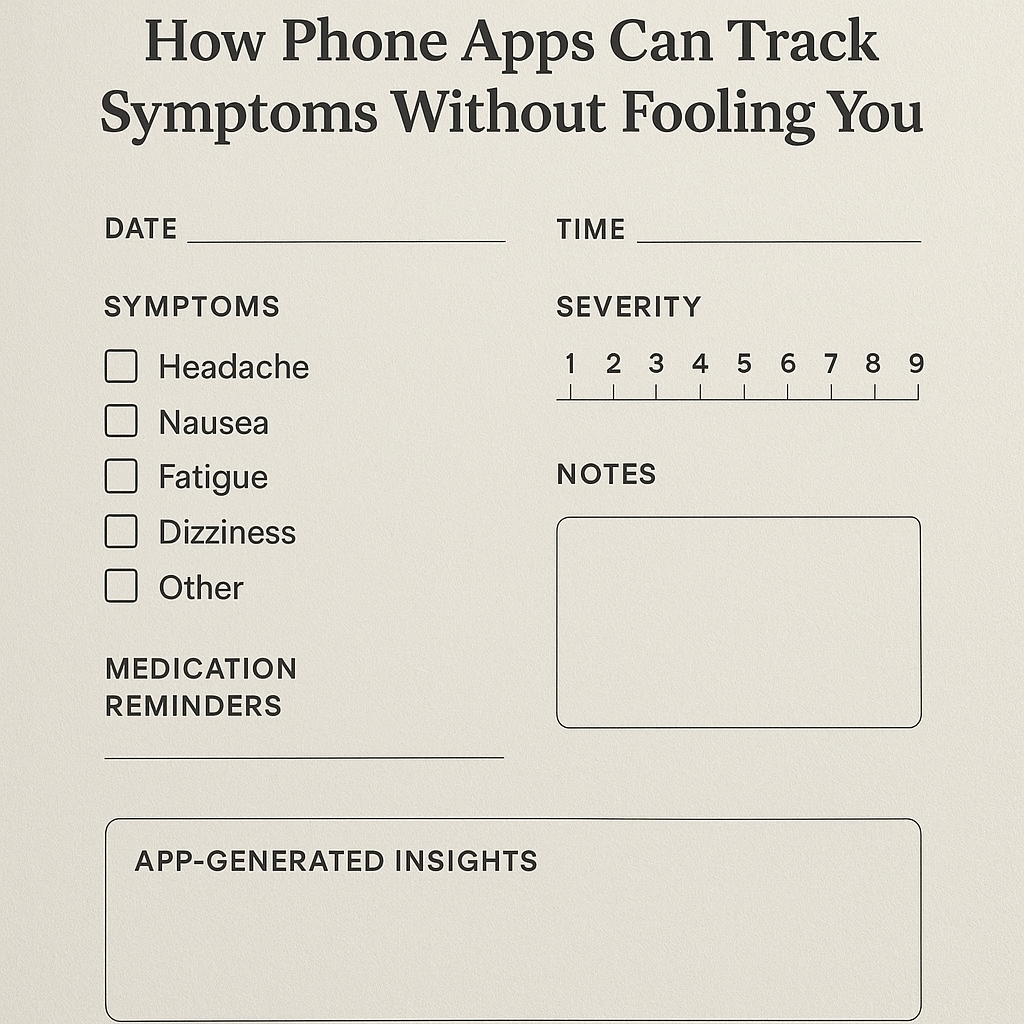
A decent symptom app should let you capture:
- symptom type
- onset and duration
- severity scale
- location in the body
- associated factors
- medication use
- outcome over time
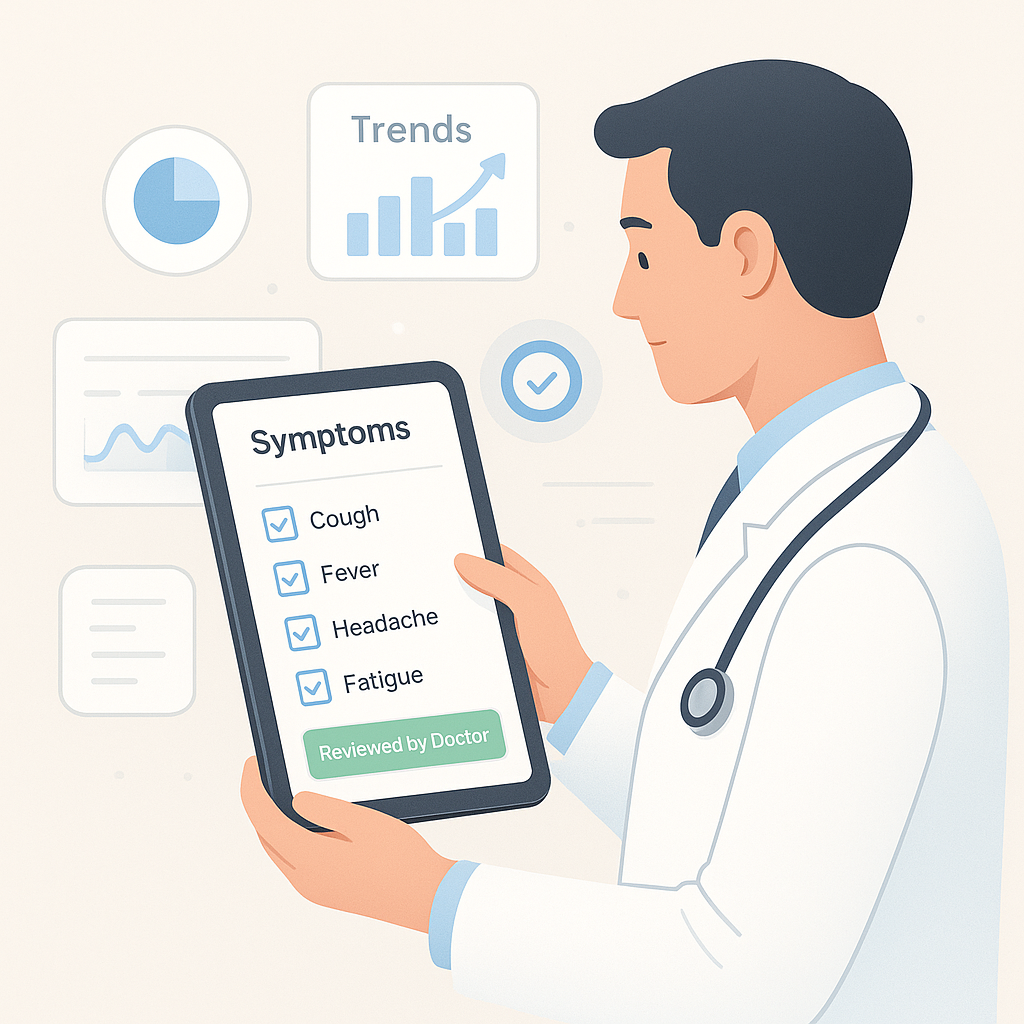
Used properly, these data help you and your clinician see whether your symptoms are random, cyclical, activity-related, diet-related, or linked to stress and sleep. That is the point. Not drama.
You will find plenty of apps promising clever predictions, but many of them are built on thin evidence, shaky algorithms, or vague wellness language. Frankly, if an app claims to detect every problem from a few taps and graphs, skepticism is healthy. A good symptom diary is boring, because boring data is often the most honest.
Core Benefits and Why It Matters
Symptom tracking matters because it turns vague suffering into usable information. That is not glamorous, but it is useful, and useful beats flashy every time.
- Improves recall during appointments
- People forget details when they are under stress, rushed, or in pain.
- A log gives your clinician dates, durations, and context instead of guesses.
- Reveals patterns over time
- Headaches after poor sleep, digestive upset after certain foods, joint pain after a hard training block, mood changes around hormonal shifts—these patterns are easy to miss in the moment.
- The app helps connect dots you would otherwise scatter.
- Supports better self-management
- Once you know your common triggers, you can adjust sleep, hydration, caffeine, training volume, meal timing, or stress load.
- That beats treating every flare-up like a mystery movie.
- Helps evaluate whether interventions work
- If you change medication, diet, exercise, or recovery habits, a symptom log can show whether things actually improve.
- Without tracking, “I think it helped” is often just wishful thinking.
- Can reduce unnecessary tests in some cases
- Not always, and not by itself.
- But a well-kept record can help a clinician decide which issues look urgent and which deserve watchful follow-up.
Here’s the kicker: tracking only works when it stays grounded. A Catholic sense of stewardship fits here nicely, because the body is not disposable hardware; it deserves care, attention, and restraint. That means using data to serve health, not to feed vanity or fear.
There is also a mental health angle. Some people track symptoms because they are trying to reduce uncertainty, and that is reasonable. Others track because they are spiraling. Those are not the same thing. The first is prudent. The second can become self-absorption dressed up as wellness.
When I analyzed symptom logs in clinical settings, the clearest ones were short, repeated, and factual. The worst ones were emotionally saturated novels. No one needs a novel.
Step-by-Step Guide to Using Phone Apps Well
Use the app like a tool, not a shrine. That sounds blunt because it needs to be.
- Pick one main symptom to follow first
- Start with the symptom that bothers you most or appears most often.
- Headaches, stomach pain, fatigue, sleep quality, panic symptoms, menstrual pain, and joint stiffness are common starting points.
- Tracking everything at once usually becomes a mess.
- Define what you are measuring
- Write down how you will rate the symptom: 0–10 severity, number of episodes, minutes of duration, or days per week.
- Pick a method and stick with it.
- Consistency matters more than elegance.
- Log the context, not just the symptom
- Add sleep hours, meals, hydration, exercise, stress, medication, alcohol, caffeine, and menstrual phase if relevant.
- These are often more useful than the symptom score itself.
- Symptoms rarely appear from nowhere.
- Keep entries brief and factual
- Use plain language.
- Example: “Headache, 6/10, 3 p.m., after 4 hours sleep, skipped lunch, improved after water and rest.”
- That is enough.
- Review the data weekly, not every ten minutes
- Obsessive checking makes people see phantom patterns.
- Weekly review is usually enough to spot trends without feeding anxiety.
- If you stare at the app all day, you are probably making things worse.
- Bring the log to medical visits
- The app is most helpful when it informs a real conversation.
- Share screenshots, export reports, or summarize patterns before your appointment.
- Clinicians care more about trends than fancy charts.
- Adjust the system if it becomes burdensome
- If logging takes too long, simplify it.
- If the app increases worry, switch to paper or reduce the number of fields.
- A tool that disrupts life is not helping.
I have found that the best symptom trackers are almost boring to look at. That is a good sign. No fireworks, no weird badges, no pointless streak theater.
The deeper lesson is moderation. Health data should serve prudence, and prudence has limits. Even good information becomes bad if it starts ruling your attention like a petty tyrant.
Comparison Table: Phone Apps vs. Paper Symptom Diaries
| Feature |
Phone Apps |
Paper Symptom Diary |
| Convenience |
Easy to carry, quick entries, reminders |
No battery, no updates, simple always available |
| Pattern detection |
Charts and exports can help spot trends |
Manual review, slower but often clearer |
| Accessibility |
Good for many users, but some apps are cluttered |
Very usable for people who prefer handwriting |
| Privacy |
Depends on app policies and device security |
Physical privacy, but can be lost or seen by others |
| Cost |
Some free, some paid subscriptions |
Cheap, often just a notebook |
| Clinical use |
Easy to share digitally |
Must be photographed or transcribed |
| Risk of overtracking |
Higher, because apps invite more taps and alerts |
Lower, because paper is less addictive |
The “biggest competitor” here is not another app. It is the old paper diary. And the truth is, paper still wins for some people because it is slower, less distracting, and less likely to tempt you into compulsive checking.
Apps win when you need reminders, exportable records, or integration with devices. Paper wins when you need simplicity and calm. Choose the one that makes the data cleaner, not the one that looks cooler.
Common Mistakes to Avoid
Most bad symptom tracking comes from bad assumptions. That is the annoying part. People expect precision from messy human biology, then blame the app when the logs turn into junk.
- Recording every feeling as a symptom
- Not every tired afternoon means disease.
- Not every stomach grumble means intolerance.
- Some days are just days.
- Changing too many variables at once
- If you start a new diet, new supplement, new workout plan, and new sleep schedule on the same week, your log is nearly useless.
- You will not know what changed what.
- Treating correlation like causation
- A headache after pizza does not prove pizza caused it.
- Repeated patterns matter; one-offs do not.
- Letting the app fuel anxiety
- If logging increases panic, stop and simplify.
- Health data should clarify, not torment.
- Using vague entries
- “Bad day” tells nobody anything.
- Write what happened, when, and what else was present.
- Ignoring the clinician’s input
- Symptom apps are not judges.
- They are records.
- A clinician still has to interpret them.
The biggest mistake is treating the app like an oracle. It is not one. It is a notepad with batteries. That’s it.
Frequently Asked Questions
Can phone apps really help diagnose health problems?
No, not by themselves. They can help reveal patterns, but diagnosis depends on history, exam, and sometimes tests.
What symptoms are best to track in an app?
Common examples include headaches, digestive issues, sleep problems, menstrual symptoms, pain flares, mood shifts, and medication side effects.
How often should I log symptoms?
Usually once or twice a day is enough unless your clinician asks for more detail. Overlogging can add noise and stress.
Are symptom apps private?
Some are reasonably secure, others are sloppy. Check the privacy policy, permissions, and data-sharing rules before entering anything sensitive.
Final Thought
Phone apps can be useful, but only if you keep them in their place. A symptom log should help you notice patterns, prepare for appointments, and make wiser choices about sleep, food, movement, and recovery. It should not become a compulsive ritual or a substitute for medical judgment. The body is worth careful attention, yes, but attention without restraint quickly turns into noise.
The best use of these tools is humble and disciplined. Track what matters, ignore what does not, and remember that human health is not a spreadsheet to be worshiped. It is something entrusted to us, and good stewardship means clarity, moderation, and an honest look at what the body is saying.