Obesity, Metabolic Syndrome, and Chronic Pain: What the Evidence Says
Obesity and metabolic syndrome can raise the likelihood and burden of chronic pain, while persistent pain can make weight gain more likely by disrupting movement, sleep, mood, and sometimes medication choices. The association runs both ways; it is not proof that body weight alone caused a person’s pain.
Pain is personal. Two people with similar body measurements can have very different symptoms, diagnoses, and treatment needs. BMI is a screening measure, not a verdict on someone’s health or an explanation for every ache. Chronic pain also deserves assessment in its own right; it should not be dismissed as a weight issue.
Frankly, simple blame-and-fix advice misses the point. A useful plan asks what is driving pain, what is making movement harder, and which small changes can improve function without adding shame or unnecessary risk. The body deserves care and stewardship, not punishment.
What Is the Link Between Obesity, Metabolic Syndrome, and Chronic Pain?
Chronic pain is pain that persists or recurs over time, often beyond the expected period of tissue healing. Clinicians commonly use three months as a practical threshold, but the history, symptoms, and underlying condition matter more than a calendar alone. Pain can involve joints, muscles, nerves, internal organs, or several sites at once.
Obesity describes excess body fat that can affect health, but BMI—a calculation using height and weight—is only one screening tool. It does not distinguish fat from muscle, show where fat is stored, or capture a person’s full health picture. Metabolic syndrome is a cluster of risk factors that commonly includes increased waist circumference, elevated blood pressure, high blood sugar, high triglycerides, and low HDL cholesterol. The NHLBI explains that clinicians assess these factors together; diagnostic details and waist thresholds may vary. See the NHLBI overview of metabolic syndrome.
Several pathways may connect these conditions with pain. Extra load on weight-bearing joints can increase mechanical stress, particularly at the knees, hips, and spine. In osteoarthritis, that stress can interact with changes in cartilage, bone, and joint tissues; it is not simply a matter of a joint being “worn out.” The National Institute of Arthritis and Musculoskeletal and Skin Diseases explains osteoarthritis, including its joint and whole-person effects.
Fat tissue is also biologically active. Visceral fat, which sits around abdominal organs, can release inflammatory signals and adipokines, including interleukin-6, TNF-alpha, and leptin. These substances may contribute to low-grade inflammation and greater sensitivity in pain pathways. The biology is complicated, though: a plausible mechanism is not proof that it causes a particular person’s pain.
Pain processing can change too. Central sensitization refers to increased responsiveness in the nervous system, so ordinary input may feel more painful or pain may spread beyond one area. It can be relevant in conditions such as fibromyalgia, but it is not a synonym for imaginary pain, and it cannot be diagnosed from weight alone. Metabolic syndrome features—including insulin resistance, abnormal blood lipids, and high blood pressure—have also been associated with worse pain or disability beyond BMI in some studies. That association deserves attention, not overclaiming.
Why This Connection Matters
Seeing the two-way link changes how care is planned. If pain makes walking, cooking, shopping, or sleeping difficult, telling someone to “just exercise more” is not a treatment plan. The starting point may instead be an evaluation, pain control, adapted movement, or help with daily tasks. Similarly, focusing only on weight can miss nerve pain, inflammatory disease, injury, or another treatable cause.
The reverse direction matters as well. Pain may reduce physical activity, disrupt sleep, and change appetite or mood. Some medicines can affect weight or energy, but patients should not stop or alter a prescription without discussing it with the prescriber. When I analyze this relationship, the practical point is that each problem can reinforce the other; it is rarely useful to insist that one must be solved completely before addressing the second.
Metabolic health offers information that BMI alone cannot provide. Someone’s blood pressure, blood glucose, triglycerides, HDL cholesterol, and waist measurement may help a clinician identify risks that deserve care even if the person’s BMI changes little. The NIDDK’s information on health risks related to overweight and obesity also makes clear that health effects are broader than a number on the scale.
There is a gut–brain connection worth studying, but not overselling. Microbes in the gut and their products can communicate with immune and nervous systems. Changes in gut microbial communities have been reported in several pain conditions, including fibromyalgia and some visceral or musculoskeletal pain disorders. Research reviewed in the Journal of Clinical Investigation’s article on the gut–brain axis and microbiota supports the biological plausibility of communication between these systems. It does not establish that dysbiosis is the single cause of chronic pain or that a commercial microbiome product will fix it.
Why care about that distinction? Because early human findings and animal experiments can point toward promising questions, but they do not equal proven treatment. Fiber-rich foods can support general health and a diverse diet; selected probiotic strains are being studied, with results that may differ by strain and condition. Fecal microbiota transplantation is a research or specialist medical intervention for specific indications, not a do-it-yourself pain remedy. The NCCIH overview of probiotics discusses limits and safety considerations.
A Step-by-Step Plan for Addressing Pain and Metabolic Health
There is no single workout or meal plan that suits every person with pain. A sensible approach starts with safety, then builds consistent habits around the person’s symptoms, medical history, and priorities.
- Get the pain assessed. Describe where it hurts, when it began, what changes it, and how it affects sleep and daily function. Mention numbness, weakness, swelling, fever, recent injury, or rapidly worsening symptoms. Seek urgent medical advice for severe or sudden symptoms, and ask a clinician which evaluation fits your situation. Do not assume weight explains a new or unusual pain.
- Review the whole health picture. Ask whether checking blood pressure, glucose, blood lipids, waist circumference, or other measures makes sense. A clinician can determine whether metabolic syndrome is present and whether another diagnosis could explain the pain. Discuss medicines, including possible effects on appetite, alertness, or weight. Do not stop a prescribed medicine on your own.
- Choose movement you can repeat. Begin with a manageable amount, such as a short walk, gentle cycling, water exercise, or mobility work, if those options are safe for you. Short bouts count. For joint pain, a physical therapist can help adjust range of motion, pace, equipment, and exercise selection. If an activity causes a strong flare that lasts, scale it back and seek advice rather than treating pain as a test of character.

- Add strength training gradually. Strength work can support daily function and help maintain muscle while body weight changes. Start with a few controlled movements using a chair, resistance band, light weights, or body weight, depending on ability and professional guidance. Build slowly; good form and a tolerable dose matter more than exhaustion. People with significant joint, nerve, heart, or balance problems may need individual instruction first.
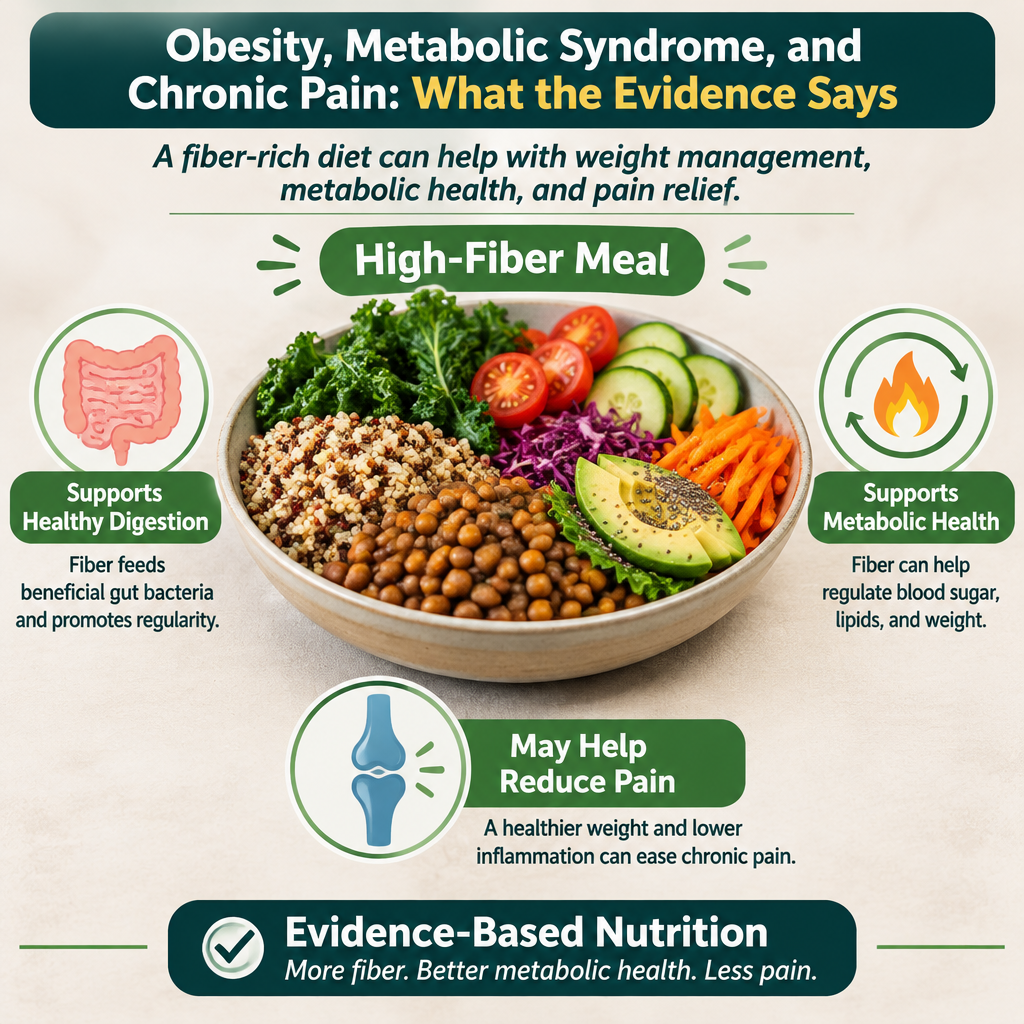
- Build meals around nourishment, not punishment. A practical pattern can include vegetables, fruit, beans or lentils, whole grains, a protein source, and unsaturated fats, adapted to culture, budget, preferences, and medical needs. Fiber-containing foods support gut microbes and can help make meals satisfying, but they are not a guaranteed pain treatment. Increase fiber gradually and drink fluids as appropriate. Avoid treating a restrictive “detox” or a single superfood as the answer.
- Protect sleep and mental health. Pain, poor sleep, stress, and low mood can feed one another. Ask about help for insomnia, sleep apnea symptoms, anxiety, depression, or stress that is becoming hard to manage. Relaxation skills, cognitive behavioral approaches, and social support can complement medical care; they do not imply that pain is “all in your head.”
- Track function as well as weight. Note walking tolerance, sleep, pain interference, strength, energy, and tasks that have become easier. A simple weekly record can reveal patterns more clearly than checking the scale every day. If weight reduction is clinically appropriate, discuss realistic options with a qualified clinician or dietitian; medication or surgical care may be appropriate for some people, but neither is a moral test.
- Treat microbiome products cautiously. Food sources of fiber are reasonable parts of many eating patterns. If considering a probiotic, ask a clinician or pharmacist about the exact strain, evidence, interactions, and safety—especially if immunocompromised or seriously ill. Product labels vary, and a result from one strain does not establish that another will help. Fecal microbiota transplantation should only be considered through proper medical care for an established indication or regulated research.
The useful measure is not whether a plan looks impressive on paper. It is whether it can be repeated, adjusted when symptoms change, and maintained without causing harm. Here’s the kicker: consistency often beats a punishing burst of effort followed by a crash.
Comparison: BMI Alone Versus Metabolic Syndrome
BMI can be a useful screening signal, but it does not measure inflammation, blood sugar control, or cardiovascular risk directly. Metabolic syndrome adds information about several of those factors. Neither measure diagnoses the cause of chronic pain, and neither should replace a clinical assessment.
| Feature | BMI or body weight alone | Metabolic syndrome assessment |
|---|
| What it describes | A height-and-weight screening measure; it does not show body-fat distribution or composition. | A cluster of measures such as waist circumference, blood pressure, blood glucose, triglycerides, and HDL cholesterol. |
| What it may miss | Insulin resistance, high blood pressure, abnormal lipids, and differences in muscle or fat distribution. | Pain causes unrelated to metabolic health, as well as individual factors not included in the syndrome criteria. |
| Possible relevance to pain | Higher weight can increase mechanical load on weight-bearing joints and may correlate with pain burden. | Metabolic abnormalities may be associated with worse pain outcomes even after accounting for BMI. |
| What it can establish | A screening category, not proof that weight caused pain or a full measure of health. | A reason to assess and manage cardiometabolic risks, not proof that the syndrome caused a specific pain condition. |
| Useful next step | Discuss context, symptoms, and appropriate health measures with a clinician. | Review the individual risk factors and create a plan that addresses them alongside pain and function. |
When I compare the two, metabolic syndrome is not a “competitor” that makes BMI useless; it is a broader set of clinical clues. A person can have an elevated BMI without meeting metabolic syndrome criteria, or metabolic risks that deserve attention without a high BMI. Definitions also use thresholds that may differ across populations, so a table cannot replace clinical interpretation.
For pain care, the comparison argues against using one number as a shortcut. Joint mechanics, inflammation, nerve sensitivity, sleep, mood, and physical conditioning may all contribute in different proportions. Ask what needs treatment and what can be changed safely, rather than waiting for a scale target before addressing pain.
Common Mistakes to Avoid
Blaming every symptom on weight. That can delay diagnosis and make people less willing to seek care. Chronic pain can result from osteoarthritis, nerve disorders, injury, inflammatory illness, and other causes. A respectful assessment considers the full history and examination.
Assuming BMI tells the whole story. BMI does not report blood pressure, glucose, cholesterol, fitness, or where body fat is stored. It is one tool among several. Treating it as a complete diagnosis is poor measurement, not precision.
Demanding high-impact exercise immediately. A painful knee or back does not need a boot-camp challenge. Low-impact cardio, modified strength work, or movement in water may be more tolerable starting points. The right level depends on the diagnosis, health status, and response to activity; a physical therapist can help set it.
Chasing rapid weight loss. Very restrictive eating can be hard to sustain and may compromise nutrition or worsen the relationship with food. A gradual, medically appropriate approach is usually more useful than dramatic promises. Weight is not the only sign of progress: function, metabolic measures, and pain interference matter too.
Treating probiotics as proven pain medicine. Microbiome science is active, but evidence varies by condition, product, and study design. The NCCIH cautions that effects are not universal and that supplements can pose risks for some people. A probiotic should not replace diagnosis, prescribed treatment, or a balanced eating pattern.
Calling central sensitization imaginary. Changes in pain processing are biological, even when scans do not show a clear injury. Equally, not every persistent pain problem is central sensitization. The term should help guide care, not close the case or discredit a patient.
Ignoring sleep, mood, and medication effects. These factors may amplify pain or make self-care harder. They are not evidence of weak character. Bring them into the care conversation, and review medication concerns with the prescriber instead of making abrupt changes.
Making every day a test of willpower. Pain can fluctuate, and setbacks happen. A plan that respects limits and allows gradual progress is more likely to last. Let’s be real: shame is a poor exercise program and an even worse medical strategy.
Frequently Asked Questions
Can obesity cause chronic pain?
Obesity can contribute to pain risk and burden through mechanical stress on joints and possible inflammatory and metabolic pathways. But it does not automatically cause pain, and it cannot explain every case. A clinician should assess persistent or new symptoms rather than assuming they are weight-related.
Does metabolic syndrome worsen pain independently of BMI?
Studies have associated metabolic syndrome features—including insulin resistance, abnormal blood lipids, and high blood pressure—with pain severity or disability in some groups, even after accounting for BMI. Association does not prove causation. The individual risk factors are still important to identify and manage for overall health.
Can losing weight reduce joint pain?
For some people, gradual weight reduction may reduce mechanical load on weight-bearing joints and improve mobility. The amount of benefit varies, and weight change does not replace treatment for osteoarthritis or another diagnosis. A clinician, dietitian, or physical therapist can help tailor a safe plan.
Do probiotics or fecal microbiota transplantation treat chronic pain?
They are not established general treatments for chronic pain. Specific probiotics are being studied, and early findings do not mean every product works. Fecal microbiota transplantation is not a do-it-yourself option and should only occur under appropriate medical care for an accepted indication or in regulated research.
Final Thought
Pain and metabolic health deserve attention at the same time. That does not mean every person needs the same diet, exercise routine, or target weight. It means building a care plan around the actual symptoms and health risks, then changing the parts that can be changed without pretending that biology, money, time, or access to care are identical for everyone.
A modest start can be worthwhile: ask for an assessment, take a short supported walk, add a nourishing food, or arrange a medication review. If pain flares, adjust the plan rather than treating the flare as failure. For some people, the next useful step is physical therapy; for others, it is sleep evaluation, metabolic testing, or help managing depression alongside pain. Several small, coordinated steps may do more than a dramatic promise.
Health is not a moral scorecard. The body deserves patient, practical care, and a good plan should preserve dignity while improving function. Seek qualified medical advice for persistent pain, new symptoms, or questions about medications and supplements. The goal is not to win an argument with a scale; it is to make daily life more manageable and protect health for the long run.