Physician wellness is not a luxury or a reward for finishing the work; it is the practical care of physical, mental, and social health that helps clinicians...
Physician Wellness: Practical Ways to Protect Health, Energy, and Purpose
Physician wellness is not a luxury or a reward for finishing the work; it is the practical care of physical, mental, and social health that helps clinicians live well while doing demanding work. Jessie Mahoney, MD, a board-certified pediatrician and certified coach, spent nearly two decades as a physician leader at The Permanente Medical Group before founding Pause & Presence Coaching & Retreats. A KevinMD Subscriber Spotlight dated October 9, 2026, notes that she has published 37 essays on the site, though the supplied profile ends before saying when that count began.
What Is Physician Wellness?
Physician wellness is the capacity to maintain health, meaning, and functional well-being while practicing medicine, alongside the organizational conditions that make that possible. It includes more than being free of a diagnosed illness. Sleep, mood, physical activity, nutrition, social connection, autonomy, safety, and time to recover all matter. So do workload, staffing, administrative burden, team culture, and access to care.
That definition matters because wellness is often sold as a personal productivity project. A clinician is told to meditate, drink water, or download an app, while an unsafe schedule or endless documentation remains untouched. Frankly, that is incomplete. Individual habits can support resilience, but they cannot repair every workplace problem. The World Health Organization describes burnout as an occupational phenomenon, not a medical condition, and associates it with chronic workplace stress that has not been successfully managed. Its burnout guidance is a useful reminder to look beyond an individual's supposed failure to cope.
The source profile offers a modest, concrete example of one professional path: Mahoney worked as a physician leader, later founded Pause & Presence Coaching & Retreats, and published essays on KevinMD. Those facts do not establish what she advises in every essay, nor do they prove that coaching prevents burnout. They do, however, point toward two relevant questions: what helps clinicians pause long enough to notice their needs, and what changes are required beyond the individual?
I think the distinction is worth protecting. Coaching can help a person examine choices, set goals, and practice boundaries; clinical care is needed when symptoms suggest depression, anxiety, trauma, substance-use concerns, or another health issue. The two can complement each other, but they are not interchangeable. A reflective exercise is not a diagnosis, and a breathing technique cannot fix a dangerous shift pattern.
A useful model has two layers. The first is personal: physical activity, food, sleep, medical care, relationships, and boundaries. The second is structural: reasonable workload, adequate staffing, respectful leadership, psychological safety, and time for documentation and recovery. Strong physician wellness efforts work on both layers rather than pretending one can replace the other.
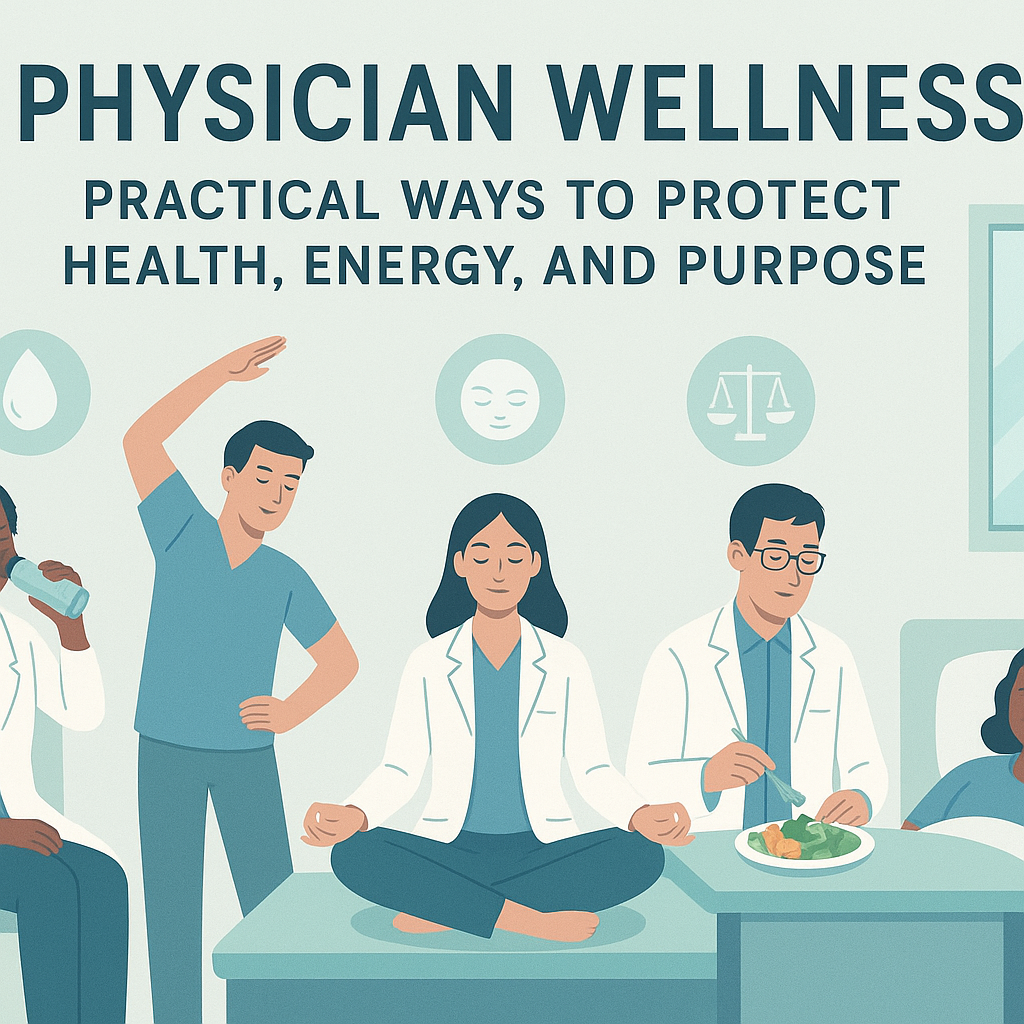
Why Physician Wellness Matters
Wellness matters because clinicians are people, not instruments that can be run indefinitely at full output. Physical and emotional strain can affect a clinician's quality of life, concentration, relationships, and ability to remain in a profession they value. That does not mean a tired physician is automatically unsafe or that every hard week signals burnout. It means persistent distress deserves attention before it becomes the new normal.
The U.S. Surgeon General's advisory on health worker burnout discusses system-level contributors and calls for changes that support the health workforce. Read the Surgeon General's health worker burnout advisory with this plain point in mind: individual coping skills are useful, but leaders and organizations also have responsibilities. An employer should not advertise resilience training as the answer while ignoring chronic understaffing or avoidable administrative friction.
Several benefits of a sound wellness approach are practical rather than flashy:
- More reliable energy. Regular movement, sufficient sleep opportunity, and regular meals may make it easier to manage a demanding day. They are not magic, and results differ, but the basics are less speculative than miracle supplements.
- Better physical health habits. Activity and strength training support general health and daily function. The Centers for Disease Control and Prevention summarizes adult activity targets in its physical activity guidelines. The target is a guide, not a moral scorecard.
- A more deliberate response to stress. Brief pauses, supportive relationships, and professional help when needed can create room to respond rather than merely react. None makes a difficult workplace harmless.
- More sustainable professional purpose. Meaningful work can be a source of satisfaction, but purpose should not be used to justify limitless sacrifice. A vocation still requires boundaries, rest, and fair conditions.
- Earlier recognition of trouble. Noticing changes in sleep, mood, appetite, patience, or substance use can prompt a conversation with a clinician or trusted support person sooner.
Here is the kicker: wellness is not the same as being cheerful, calm, or endlessly productive. It is not a demand that clinicians smile through strain. A healthy approach permits honest assessment, including saying that the job needs to change or that someone needs professional support.
There is also a quiet ethical point here. Bodies deserve care, not contempt. Treating health as something entrusted to us encourages moderation: neither neglecting basic needs nor turning fitness into another punishing performance target. A clinician does not need to earn food, sleep, or rest by being useful enough.
A Practical Physician Wellness Plan: Step by Step
A workable plan should be small enough to survive a difficult week. I favor routines built around repeatable actions, not elaborate schedules that assume every clinic day ends on time. Start with observation, choose a few priorities, and adjust based on what actually happens.
- Take a baseline without judging yourself. For seven days, briefly note sleep timing, movement, meals, mood, and work pressure. Do not turn the exercise into surveillance. Look for patterns: are meals skipped on clinic days, does sleep worsen after late charting, or does a short walk improve your afternoon? The goal is useful information, not a perfect log.
- Choose one physical activity anchor. For adults, public health guidance recommends at least 150 minutes of moderate-intensity aerobic activity per week, or 75 minutes of vigorous activity, plus muscle-strengthening activity on two days. These are broad targets, not a requirement to begin at full volume. A brisk 10-minute walk, a bike ride, or a short circuit can be a sensible starting point. If you have a health condition, pain, pregnancy-related questions, or a long break from exercise, ask a qualified clinician about appropriate modifications.
- Add strength training gradually. Two weekly sessions can train the major muscle groups using body-weight movements, free weights, machines, or resistance bands. Begin with manageable loads and controlled repetitions; leave room to recover. Strength work is not a contest to see how sore you can become. Learn sound technique, increase difficulty in small steps, and stop for sharp pain or concerning symptoms.
- Make food accessible before making it elaborate. Nutrition advice often gets buried under rules. A practical pattern includes regular meals when possible, protein-containing foods, fruits or vegetables, fiber-rich grains or legumes, and enough fluid for your needs. Prepare a few reliable options or keep portable food available if shifts make a conventional lunch break unlikely. No single food is a cure for fatigue, and a restrictive diet is not automatically healthier because it looks disciplined.
- Protect sleep opportunity. Keep a reasonably consistent wind-down routine when your schedule allows, reduce avoidable late-night work, and make the sleep environment comfortable and dark. Shift work and caregiving can complicate this; do not treat sleep problems as a character flaw. Persistent insomnia, loud snoring, severe daytime sleepiness, or other concerning symptoms merit medical assessment.
- Build recovery into the week. Recovery includes low-intensity activity, enjoyable time, social connection, and days without hard training. If every workout leaves you depleted, reduce duration or intensity. The point is to improve health and capacity, not to pile one more obligation onto a full calendar.
- Set one boundary and one support request. A boundary might be a protected meal break, a limit on routine after-hours messages, or a clear handoff process. A support request might be asking a supervisor to review workload, requesting peer support, or booking an appointment with a mental health professional. Individual boundaries are more effective when teams and organizations respect them.
- Review the plan after two weeks. Keep what helped, alter what did not, and drop the fantasy that a routine must be perfect to count. I have found that the honest measure is not whether someone followed a schedule without interruption; it is whether the plan can restart after interruption.
For general aerobic exercise, strength, and recovery, it can help to think in weekly patterns rather than daily perfection. One possible week might include three moderate walks, two brief strength sessions, and one longer restorative activity. Another person may need shorter movement breaks across several days. The best plan is one that fits the person's health, schedule, and preferences—and can be adjusted without shame.
The CDC's adult activity recommendations provide a useful reference point, but people should adapt activity to their health and circumstances. If food choices or nutrition needs require individual guidance, the Dietary Guidelines for Americans offer a public-health reference rather than a personalized prescription.

Comparison: Personal Wellness Programs vs. Organizational Change
The biggest competitor to an individual wellness approach is not another exercise routine. It is the idea that workplace wellness can be solved primarily through personal coping. The comparison below separates the roles of each approach. Neither should be used to erase the other.
| Dimension | Personal wellness practices | Organizational change |
|---|
| Main focus | Daily behaviors and individual support, such as activity, sleep routines, coaching, or counseling | Work design, staffing, schedule, leadership, team culture, and administrative systems |
| Examples | Walking, strength training, regular meals, peer connection, a coaching session, or seeking clinical care | Adequate staffing, reasonable workload, reliable breaks, less needless documentation, fair scheduling, and confidential support |
| What it can influence | A person's routines, self-awareness, coping options, and decisions about seeking help | Conditions that shape exposure to chronic work stress and the ability to recover |
| What it cannot do alone | Fix an unsafe system, remove excessive workload, or guarantee prevention of burnout | Replace personal medical care, meet every individual need, or create recovery without participation and trust |
| Best use | Voluntary, accessible support that respects individual circumstances | Sustained leadership action informed by staff experience and measurable work conditions |
| Common failure | Treating self-care as a substitute for fair conditions | Announcing policy changes without follow-through or meaningful staff input |
Both columns matter. An organization should not tell a clinician to meditate through an unmanageable caseload. At the same time, systemic reform does not make personal health habits irrelevant. Good programs connect individual support with actual changes to the work environment, and they evaluate whether staff can access support without stigma or career penalty.
If you are evaluating a workplace initiative, ask simple questions. Is participation voluntary? Are counseling and coaching clearly distinguished? Is time provided to attend? Are staff asked what creates the strain? Does leadership track workload, staffing, and schedule problems, or only attendance at resilience sessions? Those answers tell more than polished slogans do.
Common Physician Wellness Mistakes to Avoid
Most wellness advice fails not because clinicians lack discipline but because the advice ignores real constraints. A plan made for someone with predictable hours may be useless to a person covering nights, caring for children, or finishing charts after clinic. Here are familiar traps worth avoiding.
- Blaming the individual for structural stress. Calling every exhausted clinician insufficiently resilient is a tidy way to avoid examining workload. Personal skills can help, but the WHO's occupational framing of burnout makes workplace conditions relevant. Ask what can change at both levels.
- Treating exercise as punishment. Hard sessions are not automatically better sessions. Repeatedly training to exhaustion, especially alongside poor sleep and high work demands, can make recovery harder. Use a manageable progression and allow easier days.
- Starting with an all-or-nothing program. A plan that requires six early-morning workouts and elaborate meal preparation may look impressive on paper. If it collapses as soon as a call shift changes, it needs redesign. Ten minutes of movement is not worthless because it falls short of a full session.
- Chasing a perfect diet or supplement stack. The supplement industry is very good at selling certainty. Food patterns, access, allergies, culture, budget, and medical needs all matter. Be skeptical of claims that one ingredient will resolve fatigue, stress, or burnout. Seek a registered dietitian or qualified clinician for individualized concerns.
- Confusing coaching with therapy or medical care. Coaching can support goals and reflection. It is not a substitute for evaluation or treatment of a mental health or medical condition. If distress is persistent, worsening, or interfering with daily life, seek qualified care rather than trying to out-discipline it.
- Using mindfulness to silence a valid complaint. Pausing can make a person more aware of what is happening; it does not mean accepting preventable harm. Mindfulness should not be used to make staff tolerate poor conditions without speaking up.
- Ignoring warning signs. Persistent low mood, panic, inability to sleep, escalating alcohol or drug use, or thoughts of self-harm require support from qualified professionals. If there is immediate danger, contact emergency services or a crisis service in your location. Do not wait for a wellness challenge to solve an urgent need.
- Measuring success only by productivity. A clinician is not a machine whose only useful output is completed tasks. Better sleep, a stable relationship, less pain, or a day off that actually feels restorative are meaningful outcomes, even if they do not appear on a dashboard.
Let's be real: people often know the basics and still struggle to follow them. The reason may be time, money, health, caregiving, workplace pressure, or a lack of support—not ignorance. Better advice begins by asking what is getting in the way.
Frequently Asked Questions
What does physician wellness include?
It includes physical health, mental health, social connection, rest, and a sustainable relationship with work. It also includes workplace factors such as staffing, workload, scheduling, team culture, and access to support. A wellness program focused only on individual habits leaves out half the picture.
Can exercise prevent physician burnout?
Exercise supports general health and may improve mood and physical capacity for many people, but it cannot be promised as a way to prevent or cure burnout. Burnout is linked to chronic workplace stress, so changing work conditions matters. Activity should be scaled to health, experience, and recovery needs rather than prescribed as another test of character.
How much exercise should a busy clinician aim for?
A useful general target for adults is at least 150 minutes of moderate-intensity aerobic activity weekly, or an equivalent amount of vigorous activity, plus strength training on at least two days. Starting below that target is reasonable. Short walks and brief strength sessions can build a routine, and people with medical concerns should seek individualized advice.
Is coaching a substitute for mental health care?
No. Coaching may help with reflection, goals, or professional transitions, depending on the coach's training and the client's needs. It is not a diagnosis or treatment for depression, anxiety, trauma, substance-use disorders, or other clinical conditions. Seek a licensed health professional when symptoms are persistent, severe, or impairing.
Final Thought
Jessie Mahoney's profile is brief: pediatrician, physician leader for nearly two decades, coach, founder of Pause & Presence Coaching & Retreats, and author of 37 KevinMD essays as described in the October 9, 2026, Subscriber Spotlight. The fragment does not provide enough information to judge her full approach, and it would be careless to pretend otherwise. What it does offer is a prompt to consider how clinicians can make room for reflection and support while doing work that can consume nearly every available hour.
The answer is not another slogan about self-care. A sound approach combines individual routines with workplace responsibility: movement that fits the body and schedule, meals that sustain rather than punish, sleep opportunity, appropriate clinical care, trusted relationships, and teams that take workload seriously. When one piece is missing, the others may help, but they cannot always compensate.
Start modestly. Take a walk after a shift if it feels restorative; schedule a strength session you can repeat; eat something nourishing before the day turns chaotic; talk with someone qualified when distress persists. Then ask whether the conditions around you support health or steadily erode it. A person deserves care before reaching a breaking point, not only after.
Health is not a trophy and rest is not a moral weakness. Treating the body with respect means paying attention, using sensible training and nutrition practices, and seeking help when needed. It also means refusing to call an avoidable, harmful work environment a personal failure. Physician wellness is strongest when care for the person and care for the conditions around that person proceed together.