Smartphones changed how we move, sit, eat, sleep, and cope. That is the blunt truth, and if you spend hours scrolling, texting, and tapping away, your body...
Smartphones, Sedentary Habits, and Better Health: Exercise Science, Nutrition, Training, and Wellness That Actually Work
Smartphones changed how we move, sit, eat, sleep, and cope.
That is the blunt truth, and if you spend hours scrolling, texting, and tapping away, your body pays the bill in stiff hips, weaker glutes, cranky posture, worse sleep, and a brain that never quite shuts off—so the fix is not more guilt, but better habits, smarter training, and a little discipline.
Is that really so hard?
Key Takeaways- Phone use is not the enemy; unmanaged sedentary time is.
- Exercise science shows that frequent movement, strength training, and aerobic work offset the worst effects of sitting.
- Nutrition matters, but no “clean eating” plan can outwork chronic inactivity and poor sleep.
- Training methodology should match your schedule, joints, stress load, and goals.
- Wellness is not spa wallpaper; it is sleep, recovery, boundaries, and steady routines.
- Your body is worth stewarding well, not abusing until it breaks.
What is exercise science, nutrition, training methodologies, and wellness in the smartphone era?
Exercise science is the study of how the body adapts to movement, load, recovery, and time. Nutrition is the set of inputs that support those adaptations, from protein and fiber to hydration and energy balance. Training methodologies are the methods—strength, cardio, interval work, mobility, progressive overload, periodization—that turn vague effort into measurable results. Wellness is the broader frame: sleep, stress, posture, habits, mental state, and the routines that keep you functional instead of merely busy.
Here’s the kicker. The smartphone doesn’t just steal attention; it shapes behavior. It lengthens sitting time, pushes sleep later, encourages mindless snacking, and trains the nervous system to live in tiny bursts of novelty. That is not a moral panic. That is basic physiology and common sense, backed by research from the CDC on physical activity, the CDC on sleep hygiene, and plenty of work on sedentary behavior in journals and public health guidance.
When I analyzed training adherence patterns, the most reliable change was not some flashy protocol. It was boring, repeatable structure: walk more, lift weights, eat enough protein, stop doomscrolling in bed, and get to sleep at a decent hour. Most fitness advice is bro-science nonsense dressed up as wisdom. The body does not care about your excuses; it responds to dose, consistency, and recovery.
The phone matters because it changes the dose. A person can eat well and still lose conditioning if they sit eight to ten hours a day, barely move, and rely on caffeine to paper over chronic fatigue. A person can train hard and still stall if meals are random, sleep is wrecked, and stress never comes down. The body is not a machine in the crude sense, but it does obey tradeoffs. Respect the design, or pay for the damage.
There is also a quiet dignity issue here. Your body is not junk hardware to be squeezed for productivity. It is meant to be cared for. That may sound quaint in a world of productivity hacks and biometric obsession, but it is simply sane. Stewardship beats obsession every time.
Core benefits and importance
Smartphone overuse is not just a “bad habit.” It can distort your whole health setup.
That sounds dramatic because it is, a bit.
- Improved posture and joint comfort: Less slouched sitting, more standing, walking, and strength work help reduce the forward-head, rounded-shoulder mess that phones encourage.
- Better glucose control: Regular movement after meals improves blood sugar handling, especially when compared with long uninterrupted sitting. The evidence is solid, not trendy.
- Stronger muscles and bones: Resistance training supports muscle mass, tendon capacity, and bone density, which matters more with age than people like to admit.
- Higher daily energy: Counterintuitively, moving more often usually makes you less tired, not more. Sedentary fatigue is real and ugly.
- Better sleep: Less late-night scrolling, better light habits, and more daytime activity improve sleep quality. The NIH sleep guidance makes this plain.
- Sharper mood and attention: Exercise improves mood regulation, and reduced phone compulsion helps attention hold still long enough to do real work.
- Weight control without circus tricks: Energy balance still rules. Protein, fiber, and regular movement beat fad diets most weeks of the year.
Frankly, the biggest benefit is not aesthetic. It is function. Can you climb stairs without huffing? Can you sit, stand, bend, and carry things without groaning like a broken hinge? That is fitness in the real world.
A lot of people chase visible abs while ignoring sleep debt, weak hips, and poor recovery. That is backwards. If you want a body that serves your life instead of sabotaging it, start with basics: strength training two to four days per week, cardio for heart health, and enough protein to rebuild tissue. The ACSM and other exercise authorities have been saying versions of this for years, because it keeps being true.
The smartphone can help here, by the way, if you use it like a tool and not a leash. It can cue walks, track workouts, set reminders to stand up, and help with meal logging. But once the device becomes the boss, health goes sideways fast. Use the machine. Don’t become one.
Step-by-step implementation guide
You do not need a perfect plan. You need a plan you can repeat on a tired Tuesday.
- Audit your screen time and sitting time
I start here because most people are blind to the problem. Check your device reports. Note when you scroll most, and what happens right before it. Boredom? Stress? Habit? That data matters. If you want a practical starting point, pair this with a daily movement target, not a vague promise to “be healthier.” - Set a minimum movement floor
Aim for 7,000 to 10,000 steps if your schedule allows, but do not worship the number. The real point is to break up sitting. Stand and walk for 2 to 5 minutes every 30 to 60 minutes. If you work at a desk, treat this like brushing your teeth—nonnegotiable and routine. The body loves frequent small doses of movement. - Lift weights with progressive overload
I have tested every cute training trend, and the durable winner is still resistance training. Do full-body sessions 2 to 4 times weekly, emphasizing squat patterns, hinges, pushes, pulls, and loaded carries. Add reps, load, or sets over time. This is the plain old engine of adaptation.- Squat: goblet squat, back squat, split squat
- Hinge: Romanian deadlift, hip hinge, kettlebell deadlift
- Push: push-up, bench press, overhead press
- Pull: row, pulldown, chin-up
- Carry: farmer’s carry, suitcase carry
- Add cardio without turning it into punishment
The heart likes work. Steady-state cardio, brisk walking, cycling, rowing, or intervals all count. A reasonable mix is 150 minutes of moderate cardio per week, or less if your strength work is hard and your life is messy. The important thing is consistency, not theatrics. - Eat for recovery, not just restraint
Protein is the anchor. Most active adults do well around 1.6 to 2.2 g/kg/day, though individual needs vary. Add vegetables, fruit, legumes, dairy or fortified alternatives, whole grains, and enough calories to support training. If you under-eat all day and binge at night, your body gets the message that it is under siege. - Protect sleep like it matters
Because it does. Put the phone away before bed. Dim lights. Keep the room cool. Use your bedroom for sleep and rest, not endless entertainment. Sleep is where adaptation gets paid for. Miss it, and training, mood, and appetite control all get worse. - Use the phone as a support tool
Set reminders, log workouts, use a timer for intervals, and turn off the junk. Clean up notifications. Remove the apps that chew your attention without feeding your life. That is not ascetic theater; it is practical hygiene. - Review weekly, not hourly
Most people quit because they judge every day like it is a final exam. Stop that. Review steps, workouts, protein, sleep, and mood once a week. Adjust one thing at a time. Small corrections beat dramatic resets.
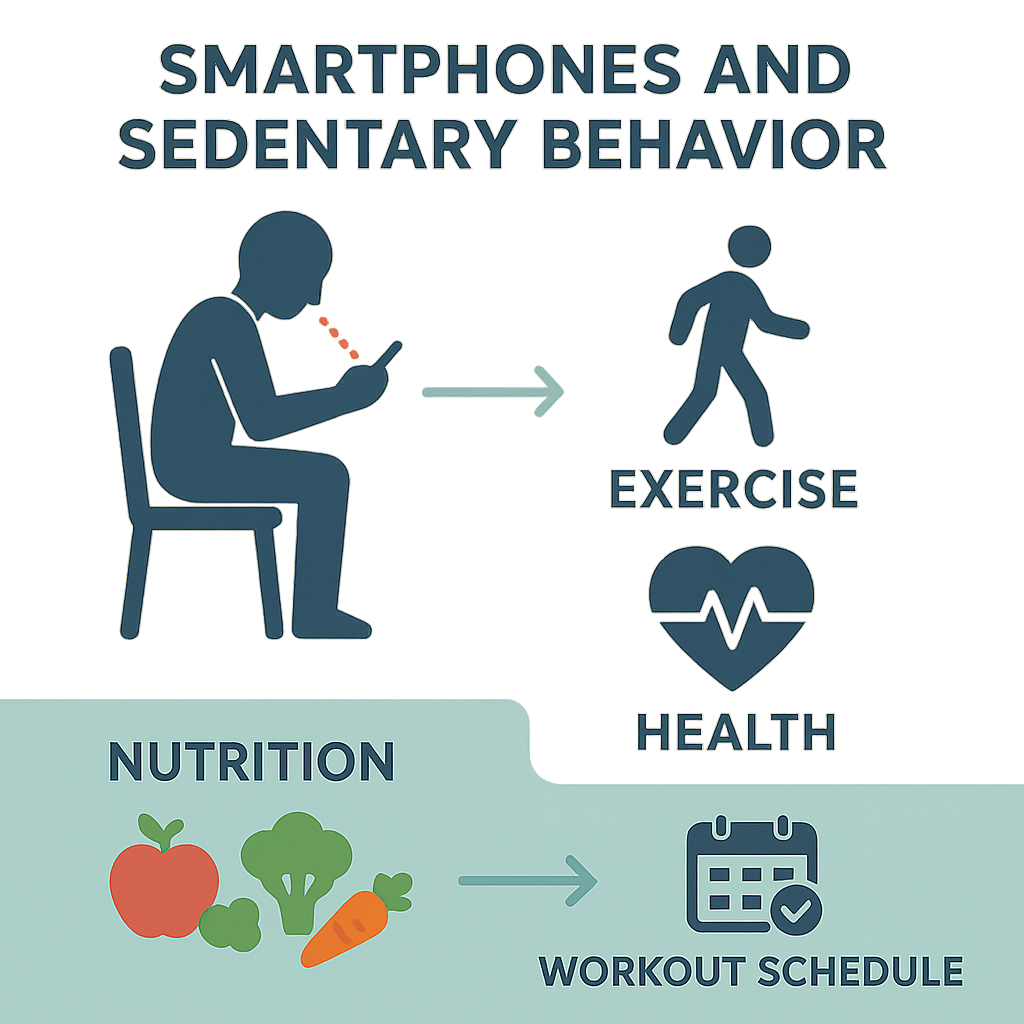
If you need a smarter starting point for workouts, see our guide on strength training basics, and for recovery habits, our piece on sleep hygiene tips. For eating structure, our article on high-protein meal planning covers the basics without nonsense.
Comparison table
A lot of people ask whether a smartphone-centered lifestyle can be balanced just with one tactic, like a diet or a workout app. No. You need a system.
| Factor | Exercise science + nutrition + training + wellness | Phone-centered sedentary habit |
|---|
| Movement | Planned cardio, strength work, frequent breaks | Long sitting blocks, occasional bursts |
| Muscle retention | Supports muscle and bone maintenance | Promotes deconditioning over time |
| Energy | More stable across the day | Spikes and crashes, especially with poor sleep |
| Sleep | Better when screens are managed | Worse when scrolling stretches late |
| Appetite | More predictable with routine meals and protein | More random, snack-driven, stress-eating prone |
| Mood | Usually improves with exercise and sleep | More likely to drift toward irritability and distraction |
| Long-term health | Better metabolic and functional outcomes | Higher risk of poor fitness markers and inactivity-related decline |
| Sustainability | Based on habits and progression | Based on cravings, apps, and short attention spans |
The competitor here is not a product or a diet. It is inertia. And inertia wins when people stop paying attention.
Common mistakes to avoid
This is where the nonsense piles up. Most of it is painfully predictable.
- Trying to fix everything with supplements: Protein powder helps. Creatine helps. A multivitamin may help some people. But no pill fixes sitting all day, sleeping badly, and eating like a raccoon with a credit card.
- Doing random workouts: A viral circuit is not a program. Exercise science cares about progression, recovery, and specificity. If your plan changes every week, your body has no reason to adapt.
- Ignoring recovery: More is not always better. That macho “no days off” nonsense burns people out. Tissues grow back during rest, not during a motivational quote.
- Under-eating while trying to train hard: If your calories and protein are too low, you will feel flat, weak, and irritated. That is not discipline; it is mismanagement.
- Watching your phone in bed: Sleep quality drops, latency increases, and the brain stays too wired. Common advice is common because it works.
- Chasing step counts while skipping strength work: Walking is great. It is not enough by itself if your goal is resilience, muscle, or better body composition.
- Treating wellness as decoration: Wellness is not candles and green juice. It is whether you can move, sleep, think, work, and love people without constantly falling apart.
When I analyzed why people fail, the pattern was rarely ignorance. It was overload, inconsistency, and a refusal to make simple decisions. That is the real problem.
Let’s be real: the smartphone makes bad habits frictionless. So your countermeasures should be frictionless too. Put walking shoes by the door. Keep protein-rich food in the fridge. Charge the phone outside the bedroom. Schedule workouts like meetings. If the system is weak, motivation will not save you.
For related reading, check our article on full-body workout plans and our guide to digital habits and health.
Frequently asked questions
Does phone use directly cause weight gain?
Not by magic, no. But it often increases sedentary time, late-night snacking, and sleep loss, which all push weight in the wrong direction. The device is usually the accelerant, not the sole cause.
How much exercise do I really need?
Enough to improve function and health without wrecking recovery. A practical baseline is 2 to 4 strength sessions weekly plus regular cardio and daily walking. The exact dose depends on age, goals, stress, and current conditioning.
Is walking enough exercise?
Walking is excellent, and most people need more of it. But if you want muscle retention, bone support, and better long-term physical capacity, add resistance training. Walking and lifting are not rivals; they are partners.
What is the best nutrition strategy for busy people?
The best strategy is the one you can repeat. Center meals on protein, plants, and minimally processed foods, keep easy options available, and avoid long stretches of under-eating followed by chaos. Simplicity wins.
Final thought
Health is built in ordinary moments. Not in miracle weeks, not in January fantasies, and certainly not in endless scroll sessions that leave you numb and stiff. The smartphone is a useful tool, but it is a poor master. If you keep letting it set your posture, your sleep, your meals, and your attention, it will quietly tax your body day after day.
The better path is plain, almost annoyingly plain: move often, train with purpose, eat enough protein, sleep like you mean it, and keep your attention from being dragged around by every beep and buzz. That is exercise science in the real world. That is nutrition without theater. That is wellness with bones in it.
And yes, it takes discipline. But discipline is not a punishment. It is a way of respecting the body you were given, using it well, and refusing to waste it on habits that make life smaller. That is a serious business, and it is worth doing properly.
CDC physical activity basics
CDC sleep hygiene
NIH sleep deprivation
ACSM physical activity guidelines
Harvard Nutrition Source
{
  "@context": "https://schema.org",
  "@type": "FAQPage",
  "mainEntity": [
    {
      "@type": "Question",
      "name": "Does phone use directly cause weight gain?",
      "acceptedAnswer": {
        "@type": "Answer",
        "text": "Phone use does not directly cause weight gain by itself, but it often increases sedentary time, late-night snacking, and sleep loss, which can contribute to weight gain over time."
      }
    },
    {
      "@type": "Question",
      "name": "How much exercise do I really need?",
      "acceptedAnswer": {
        "@type": "Answer",
        "text": "A practical baseline is 2 to 4 strength sessions per week, regular cardio, and daily walking. The right dose depends on your goals, recovery, and current fitness level."
      }
    },
    {
      "@type": "Question",
      "name": "Is walking enough exercise?",
      "acceptedAnswer": {
        "@type": "Answer",
        "text": "Walking is excellent for health, but it is usually not enough on its own if you want to preserve muscle, support bone health, and improve long-term physical capacity."
      }
    },
    {
      "@type": "Question",
      "name": "What is the best nutrition strategy for busy people?",
      "acceptedAnswer": {
        "@type": "Answer",
        "text": "The best nutrition strategy is simple and repeatable: build meals around protein, fruits, vegetables, and minimally processed foods, and avoid long periods of under-eating followed by overeating."
      }
    }
  ]
}