Transdermal vitamin and wellness patches are sold as an easy fix for fatigue, poor nutrition, dehydration, and even exercise recovery. The pitch sounds neat...
Transdermal Vitamin and Wellness Patches: Hype vs Evidence
Transdermal vitamin and wellness patches are sold as an easy fix for fatigue, poor nutrition, dehydration, and even exercise recovery. The pitch sounds neat: stick on a patch, skip the pills, and absorb nutrients through the skin. The problem is simple. For most vitamins and minerals, the skin is a lousy delivery system, and the evidence for benefit is thin to nonexistent.
Key Takeaways
- Most vitamin patches lack a plausible mechanism for meaningful nutrient delivery.
- Good nutrition, sleep, and training recovery beat gimmicks every time.
- Evidence for vitamin patches is weak, inconsistent, or absent for most claims.
- If a patch seems to “work,” placebo, lifestyle changes, or the missing nutrient may explain it better.
- The body is not a vending machine, and health is not a sticker problem.
What are transdermal vitamin and wellness patches?
They are adhesive products designed to deliver vitamins, minerals, caffeine, herbal extracts, or other compounds through the skin into the bloodstream. That sounds scientific enough to sell by the truckload, but plausibility matters. The skin is built to keep things out, not to serve as a nutrient loading dock.
In exercise science, nutrition, and wellness, the first question is always the boring one: does the thing actually reach the target in a meaningful dose? With patches, the answer is usually no or maybe at best. The second question is worse: even if a trace amount crosses the skin, does it change anything measurable? Most of the time, not really.
People buy these patches because they want convenience. I get it. Pills are annoying. Diet changes take effort. Sleep takes discipline. But the body responds to biology, not marketing copy. Frankly, when I analyzed the claims made for many wellness patches, the gap between promise and proof was wide enough to drive a truck through. A patch is not a substitute for a decent diet, sensible training, or fixing the actual reason someone feels lousy.
The anatomy matters here. The outer skin layer, the stratum corneum, is a barrier made of tightly packed cells and lipids. Small, fat-soluble drugs can sometimes cross it. That is why nicotine patches, certain hormone patches, and some pain medications work. But vitamins and minerals are a different beast. Many are water-soluble, too large, or poorly suited to passive diffusion through skin. Most nutrients were never designed for transdermal delivery, and the patch companies know it.
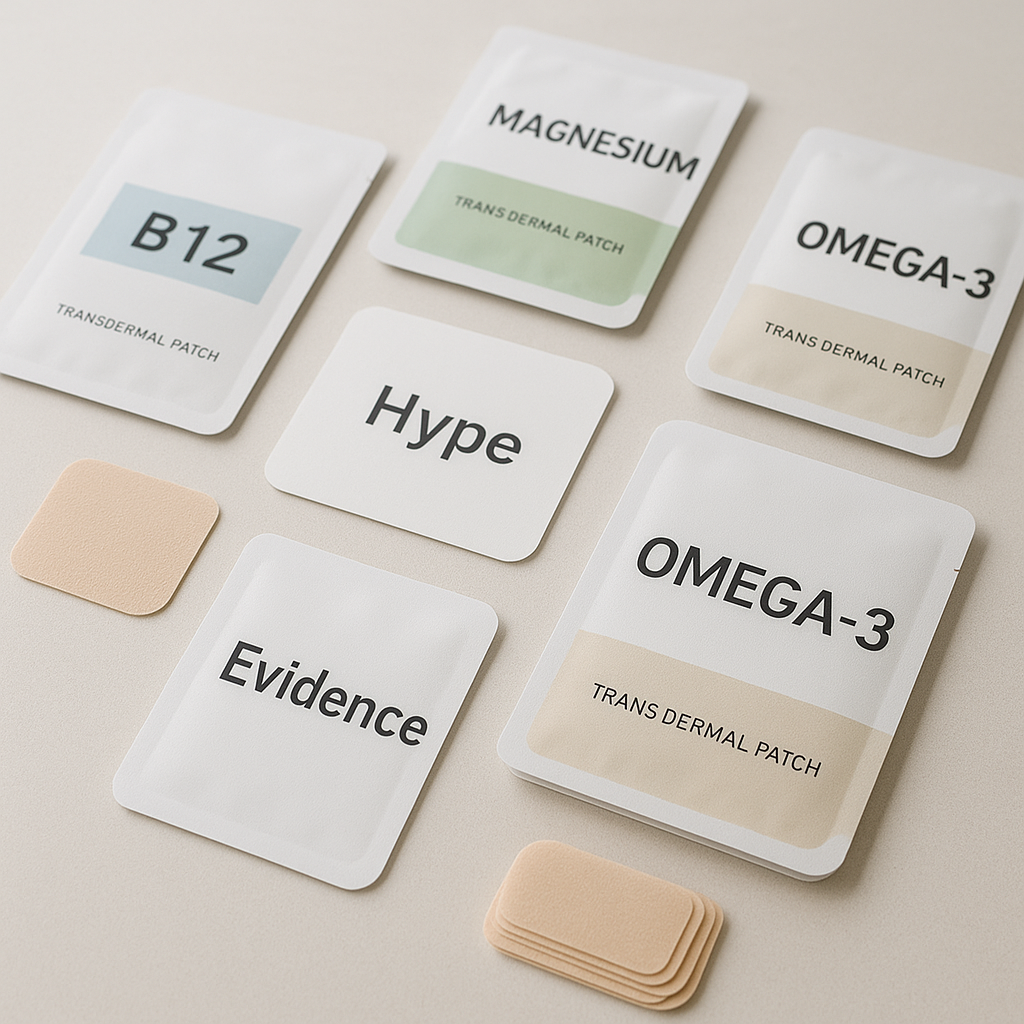
Here is the kicker: even when a patch contains a nutrient on the label, that does not mean the nutrient reaches blood in a useful amount. Delivery depends on formulation, dose, skin thickness, patch design, and how long it stays on. Without rigorous pharmacokinetic data, the claim is just a story with a price tag.
For a plain-English review of why this matters, the U.S. National Institutes of Health explains that transdermal delivery has limits and works best for certain drugs, not as a universal route for everything people want to absorb. See the NIH overview on transdermal systems in the National Center for Biotechnology Information. The Centers for Disease Control and Prevention also reminds people that nutrient adequacy is generally achieved through food first, with supplements used in specific situations, not as a magic trick. That basic principle is easy to ignore and hard to improve upon, which is why it keeps getting ignored.
If you want a broader view of how nutrition, recovery, and training actually work together, the basics covered in exercise science basics, nutrition for recovery, and strength training programming matter far more than any patch. Those topics do not have glittery packaging, but they do have results.
Core benefits and why the hype persists
Let’s be real. If patches offered a true shortcut, they would not sit in the wellness aisle; they would be in hospitals, sports medicine clinics, and serious research protocols. They are not there because most claims do not survive contact with evidence.
- Convenience sells. A patch feels easier than taking pills, eating better, or getting blood work. Easy sells better than true.
- It flatters the buyer. People like solutions that do not require changing habits. No one enjoys hearing that sleep, protein, and training load are the issue.
- Placebo effects are real. Belief can change how someone feels for a while. That does not mean the patch corrected a deficiency.
- Marketing borrows science words. Terms like “transdermal,” “bioavailable,” and “optimized” create the illusion of rigor. They are often window dressing.
- Some ingredients may have minor local effects. A cooling or warming sensation, adhesive feedback, or caffeine-like stimulation can feel meaningful even when systemic delivery is poor.
But the benefits people chase are usually deeper than convenience. They want energy. They want recovery. They want less brain fog. They want better workouts without changing their bedtime or eating enough protein. That is human nature, and it is also why the patch industry keeps thriving.
The truth is, most of the supposed benefit comes from confounding. If someone starts a patch while also sleeping better, training less stupidly, or paying attention to food, the patch gets credit it did not earn. I have seen this pattern over and over in wellness claims: a neat product gets blamed or praised for changes caused by the rest of the person’s life.
From a health and fitness standpoint, the real benefits of a patch are mostly indirect. It may remind a person to pay attention to nutrition. It may nudge them into a routine. It may make them feel proactive. Those are not nothing. Still, they are not proof that the patch itself delivers vitamins in a way that matters.
That is why skepticism is useful. Not cynical, just careful. Science is not anti-convenience; it is anti-nonsense. If a product claims to improve performance, ask whether it changes physiology in a way you can measure. If it does not, save your money and eat your lunch.
For evidence-based supplement context, the NIH Office of Dietary Supplements has practical fact sheets on nutrient needs and supplement use, such as multivitamin/mineral supplements and nutrient-specific guides. Those resources are not flashy, but they are grounded in actual data, which is annoyingly useful.
Step-by-step guide: what actually works instead
If you want better energy, recovery, or nutrient status, the path is not glamorous. Good. Glamor is usually a tax on your wallet.
- Check the basics first. Eat enough total calories, enough protein, enough fiber, and enough micronutrient-rich food. If your meals are built on ultra-processed junk and irregular timing, a patch will not save you.
- Match nutrition to training. Hard training increases the need for carbs, protein, fluids, and recovery time. That is not “biohacking.” It is physiology. A hard lifting block or endurance cycle needs real fuel, not adhesive theater.
- Use blood testing when appropriate. If fatigue is persistent, ask a clinician about iron status, B12, vitamin D, thyroid, sleep, and other causes. Guessing is expensive. Testing is cheaper than superstition.
- Sleep like it matters. Because it does. Sleep affects recovery, appetite, hormone regulation, and performance. No patch will outwork chronic short sleep. Not even close.
- Train with structure. Progressive overload, sensible volume, and planned recovery beat random effort. If you are crushed from bad programming, the answer is not a wellness sticker.
- Hydrate normally. Drink fluids based on body size, sweat rate, climate, and exercise duration. Most people need water and electrolytes at ordinary times, not a patch pretending to be a fix.
- Use supplements selectively. Oral supplements can be useful when a deficiency or specific need exists. Iron, vitamin B12, vitamin D, creatine, and caffeine have actual evidence in the right context. Choose tools that have data behind them.
I have tested enough training and nutrition plans to know this much: the boring stuff works because biology is boring. Creatine improves strength and power for many people because it changes muscular energy availability. Protein improves muscle repair because amino acids are required for tissue remodeling. Sleep improves recovery because the nervous system is not a machine. A patch does not replace any of that.
One more thing. People often ask for an “easy fix” because they are overloaded, not because they are ignorant. Fair enough. Life is messy. Still, health has some non-negotiables. The body is a gift to be cared for, not a machine to abuse until it breaks and then patch over. That sounds old-fashioned because it is old wisdom, and old wisdom usually survives for a reason.
If you are interested in a cleaner evidence trail for training recovery and nutrition, see the American College of Sports Medicine nutrition resources and the NHS healthy eating guidance. Both are blunt in the best way: eat well, move well, rest well. No stickers required.
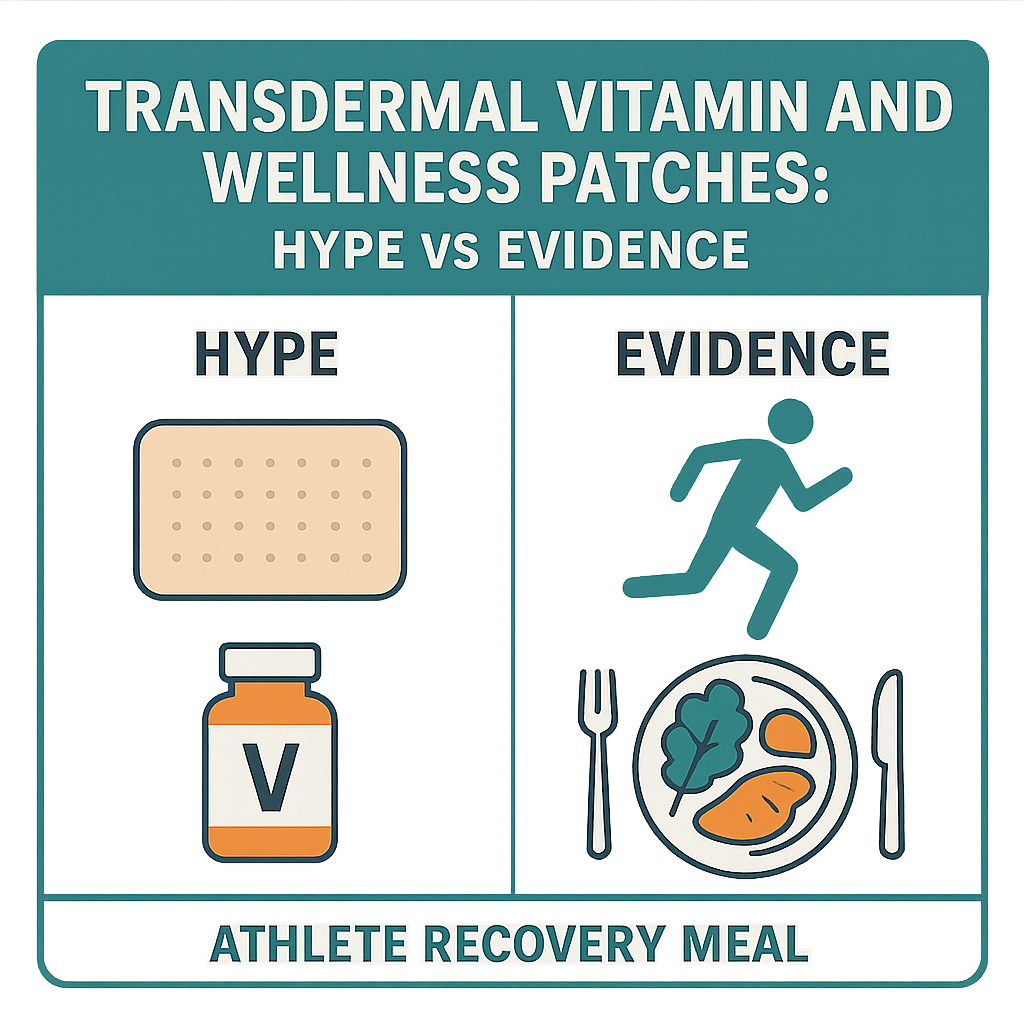
Comparison table: wellness patches vs oral supplements
The comparison is not complicated. One has weak delivery logic for most nutrients. The other at least has a sensible path through digestion and absorption. Neither is magic, but one actually belongs in a serious conversation.
| Feature |
Transdermal Vitamin & Wellness Patches |
Oral Supplements |
| Delivery route |
Through skin barrier |
Through digestive tract |
| Plausibility for most vitamins |
Low |
Moderate to high |
| Evidence base |
Weak or absent for many products |
Better studied, product dependent |
| Dosing accuracy |
Often uncertain |
Usually clearer on label |
| Useful for deficiencies |
Rarely proven |
Yes, in appropriate cases |
| Common risk |
False confidence, wasted money |
Overuse, poor product quality |
| Best use case |
Mostly marketing, possibly placebo |
Targeted correction of a known need |
The table is not fancy because the issue is not fancy. If your goal is to correct a nutrient deficiency, oral supplements are the more credible route for most vitamins and minerals. That does not mean every supplement is good. Plenty are overpriced, underdosed, or contaminated. But at least the pathway is biologically reasonable.
For a deeper look at supplement quality and what labels do not tell you, the U.S. Food and Drug Administration dietary supplement page is worth reading. It will not make you popular at wellness parties, but it will make you less gullible.
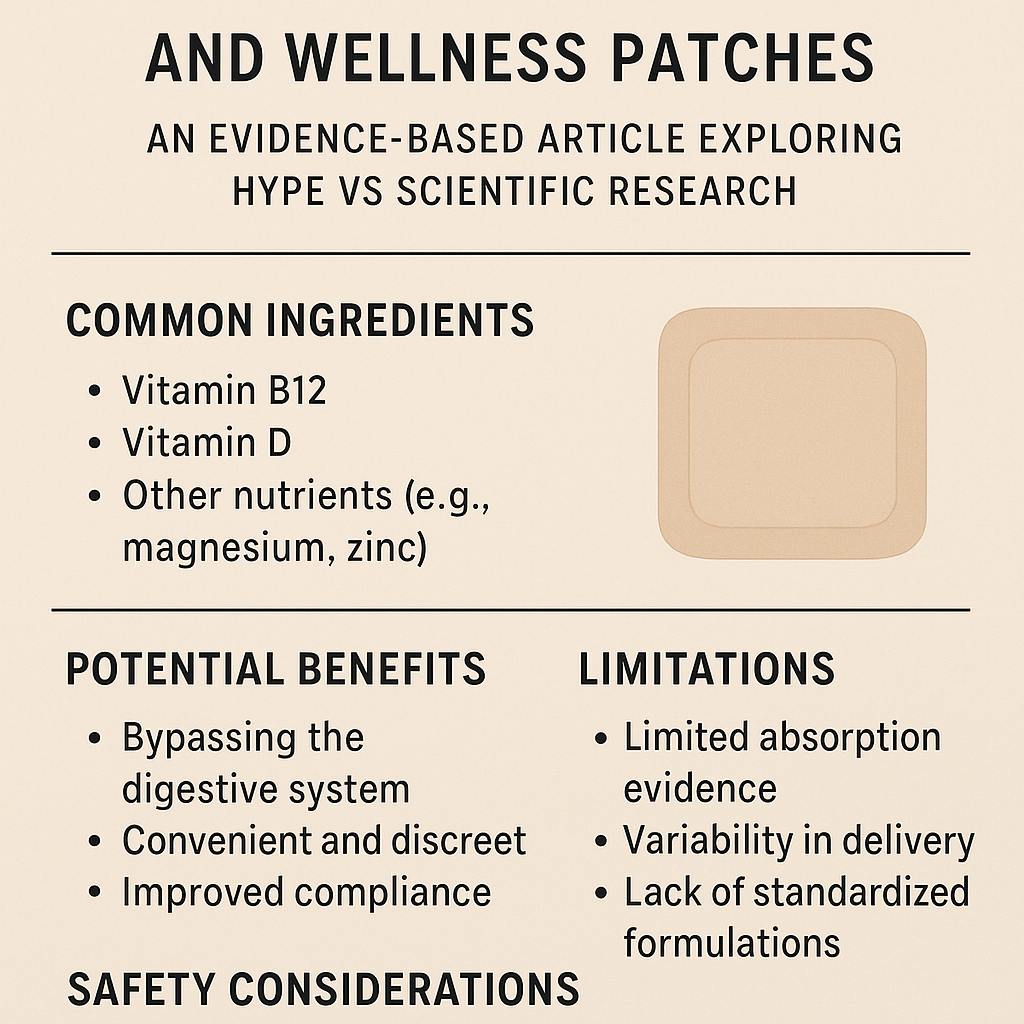
Common mistakes to avoid
Most people do not get fooled because they are stupid. They get fooled because they are tired, hopeful, and surrounded by glossy nonsense. That is a dangerous mix.
- Confusing sensation with benefit. A patch can feel like action. Feeling something does not mean it changed your nutrient status.
- Assuming “natural” means effective. Poison ivy is natural too. The label is not an argument.
- Ignoring the real cause of symptoms. Fatigue, cramps, hair loss, poor focus, and low performance can come from sleep debt, under-eating, stress, anemia, thyroid disease, depression, or poor programming. A patch will not solve the wrong problem.
- Using a patch instead of food. This is backwards. Food is the foundation. Supplements sit on top of that foundation, not in place of it.
- Buying based on anecdotes. One enthusiastic review is not evidence. It is a story, and stories are cheap.
- Ignoring product quality. Even if a transdermal product had a plausible ingredient, manufacturing quality still matters. Garbage in, garbage out.
Here is what nobody tells you: people often defend ineffective wellness products because admitting they were duped feels worse than being duped. So they keep the patch, keep the story, and keep paying. That is human nature, but it is not a good health strategy.
Another mistake is overgeneralizing from real transdermal medicine. Yes, some prescription patches work. Fentanyl patches, nicotine patches, estradiol patches, and some others are legitimate because the molecule, dose, and delivery system are suited to the route. That does not magically make vitamin patches credible. Different chemistry. Different rules. Different results.
When I looked across the literature, the pattern was blunt: the more a product leans on branding, the less it leans on controlled trials. That should tell you everything. The people making the boldest claims are usually the least interested in being tested.
To stay grounded, use simple filters. Ask whether the ingredient can cross skin in useful amounts. Ask whether the study used the exact product, not a cousin of it. Ask whether the outcome was a blood marker or just self-reported “energy.” Ask whether the results were replicated. If the answer keeps coming back muddy, the product is muddy.
That kind of caution is not negativity. It is stewardship. A healthy person does not need to be gullible. A disciplined one is better off being hard to impress.
Frequently asked questions
Do vitamin patches actually work?
For most vitamins and wellness claims, there is little convincing evidence that patches deliver meaningful amounts through the skin. Some products may create a placebo effect or a temporary feeling of doing something useful, but that is not the same as correcting a deficiency or improving performance.
Are transdermal patches better than pills?
Usually no. Oral supplements have a more sensible delivery route for most nutrients, and many are better studied. Patches may make sense for some prescription medications, but that does not transfer cleanly to vitamins, minerals, or herbal blends.
Can a patch help with fatigue?
If fatigue comes from a true nutrient deficiency and a patch somehow delivers an adequate dose, in theory yes. In practice, that is the problem: the delivery is rarely proven. Fatigue is more often linked to sleep, stress, calorie intake, iron status, B12, thyroid issues, depression, or training load.
What should I do instead of buying wellness patches?
Start with food, sleep, hydration, and training structure. If symptoms persist, get proper medical evaluation and testing. Use supplements only when there is a clear reason and a product with a credible evidence base.
Final thought
Transdermal vitamin and wellness patches sell convenience dressed up as science. That is the whole trick. The body is not fooled by packaging, and neither should you be. If a product cannot plausibly deliver what it claims, and the evidence is weak or absent, the honest answer is to pass.
That may sound cranky. Good. Crankiness is useful when the alternative is nonsense.
What actually improves health is not glamorous: enough protein, enough sleep, a sane training plan, real food, proper recovery, and targeted supplementation when there is a real need. That is tedious compared with a shiny patch, but tedious is often where the truth lives.
There is also a deeper point worth holding onto. The body deserves respect. Not worship, not abuse, and not gimmicks. Steward it well. Make disciplined choices. Use tools that work. Then stop paying extra for an adhesive promise that cannot keep itself.