Traumatic brain injury is not just a head problem. It affects movement, cognition, mood, sleep, metabolism, and long-term health, which is why recovery has to...
Traumatic Brain Injury and Recovery: What Exercise Science, Nutrition, and Training Research Actually Say
Traumatic brain injury is not just a head problem. It affects movement, cognition, mood, sleep, metabolism, and long-term health, which is why recovery has to be broader than rest alone. The newest research keeps saying the same unglamorous thing: structured care, good nutrition, progressive rehab, and realistic pacing matter far more than internet folklore.
Key Takeaways- TBI is a whole-body injury, not merely a neurologic event.
- Early assessment and the right rehab plan beat guesswork.
- Exercise, when prescribed properly, can support recovery, but sloppy training can make symptoms worse.
- Nutrition matters because healing tissue and the brain need energy, protein, fluids, and micronutrients.
- Recovery is usually nonlinear; pushing hard every day is not bravery, it is often poor judgment.
- Moderation and stewardship of the body matter here, because a damaged brain needs respect, not macho nonsense.
What is traumatic brain injury?
Traumatic brain injury, or TBI, happens when an external force disrupts normal brain function. That can come from a fall, car crash, sports collision, blast exposure, or any blunt injury that shakes, twists, or bruises the brain. The damage can be mild, moderate, or severe, but the word "mild" fools people. A so-called mild TBI can still produce weeks of headaches, brain fog, irritability, sleep trouble, and exercise intolerance.
When I analyzed how TBI is discussed in rehab settings, the biggest mistake was treating it like a simple symptom checklist. It is messier than that. The brain controls balance, heart rate regulation, attention, energy use, and emotional control, so injury often spills into systems that look unrelated at first glance. Frankly, that is why many people bounce between specialists and still feel worse.
The recent international work published in Nature Medicine matters because it reinforces a plain idea that many clinicians have been saying for years: outcomes improve when care is coordinated, not improvised. You do not fix a brain injury with a single pill, a random supplement stack, or a "pain no gain" workout. You need staged recovery, symptom-aware rehabilitation, and training that respects the nervous system's current ceiling. For a solid overview of TBI basics, see the CDC traumatic brain injury resource and the NINDS TBI page.
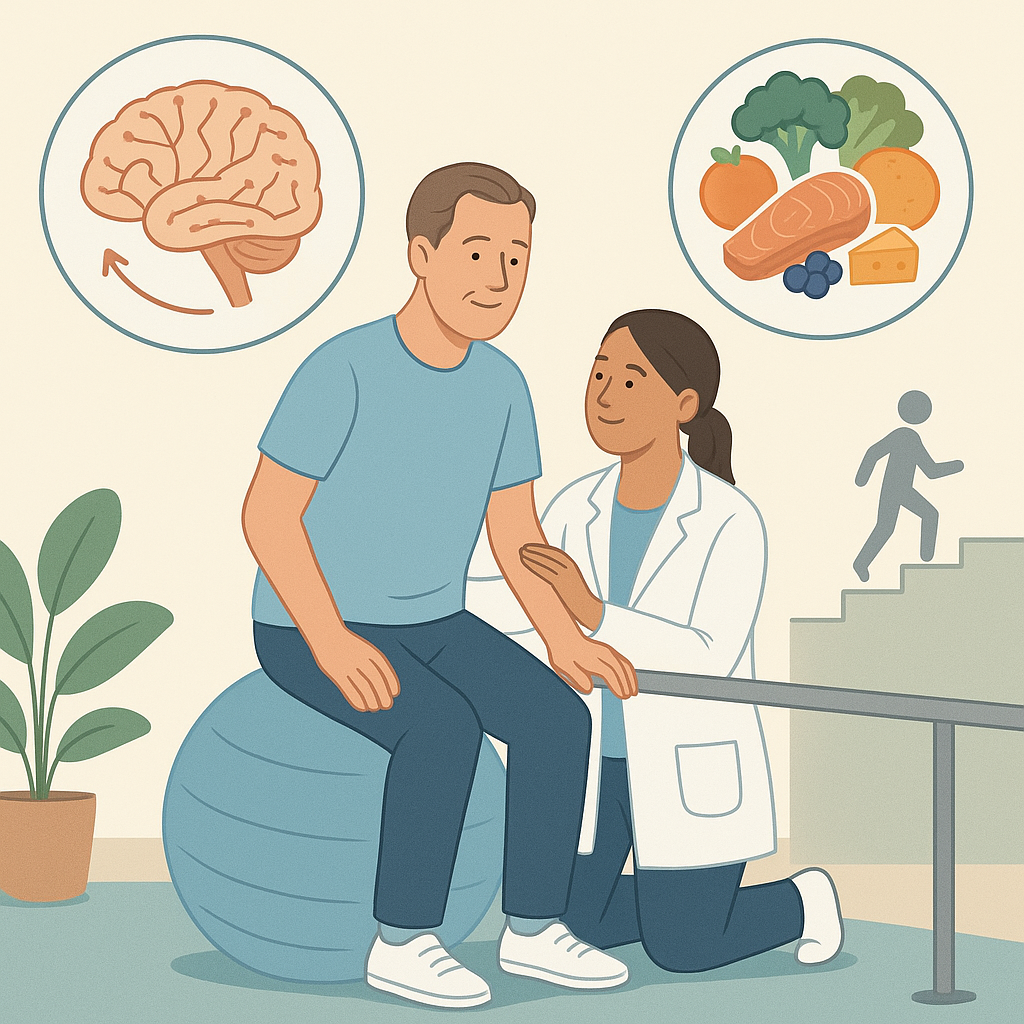
The science also reminds us that exercise science belongs in the conversation. Not because exercise magically repairs neurons, but because carefully dosed movement can improve circulation, sleep, mood, and autonomic regulation. That is the kicker. The wrong approach inflames symptoms. The right one helps the body re-learn normal load tolerance. The body is not disposable, and after TBI it is certainly not a toy.
Core benefits and importance
TBI recovery is about function, not slogans. The benefits of a structured approach are practical, measurable, and often boring in the best possible way. Here is what actually matters.
- Better symptom control: Graded activity can reduce dizziness, deconditioning, and exercise-triggered symptom spikes when managed correctly.
- Improved sleep quality: Sleep disruption is common after TBI, and regular movement, daylight exposure, and consistent meal timing help more than late-night doomscrolling.
- Preserved muscle and cardiovascular fitness: Resting too long causes deconditioning. That makes returning to work, school, sport, or daily life harder.
- Mood stabilization: Depression, anxiety, irritability, and emotional lability are common after TBI. Exercise is not a cure, but it is a legitimate adjunct.
- Cognitive support: Better sleep, reduced stress, and improved metabolic health often translate into clearer thinking and less mental fatigue.
- Lower risk of secondary problems: A well-managed recovery can reduce the odds of chronic inactivity, weight gain, insulin resistance, and social withdrawal.
Let's be real. A lot of wellness advice online is dressed-up nonsense. TBI recovery is not about "detoxing" the brain with lemon water or buying miracle mushrooms from a guy with a podcast. The boring basics win: hydration, adequate calories, protein, sleep, gradual movement, and monitoring symptoms.
Nutrition deserves more respect than it gets. The brain uses a lot of energy, and after injury the body may enter a prolonged repair state. That means under-eating is a bad idea. So is living on ultra-processed snacks that spike blood sugar and leave you flat. The more severe the injury, the more important it is to prevent malnutrition. Clinical nutrition support is often discussed in hospital care for a reason. If you want a useful medical overview, the Mayo Clinic TBI page is a decent starting point.
There is also a moral angle, though I will keep it quiet. Our bodies are not machines to be abused for vanity or ego. They are gifts to steward well. That sounds old-fashioned because it is. Still true.
Step-by-step implementation guide
Good recovery is staged. Not random. Not heroic. Staged.
- Get the diagnosis and rule out danger
Before exercise, nutrition tweaks, or anything else, serious symptoms must be assessed. Red flags include worsening headache, repeated vomiting, seizures, confusion, weakness, unequal pupils, or loss of consciousness. That is not a "wait and see" situation. Emergency evaluation comes first. - Start with symptom tracking
I like simple logs because they cut through haze. Note headache severity, dizziness, light sensitivity, sleep quality, fatigue, and what activities make things better or worse. Without data, people guess. Guessing is how they overdo it or underdo it. - Rebuild the base with light activity
Once medically cleared, begin with walking, gentle mobility, and basic breathing work. Keep intensity low enough that symptoms stay stable or only rise slightly and briefly. If symptoms flare hard and linger, the dose is too high. - Use graded exercise, not random workouts
This is where exercise science helps. Graded exertion means you increase time or intensity in small steps, based on tolerance. A stationary bike, treadmill walking, or controlled bodyweight work can all be used. Research and clinical practice around sub-symptom threshold exercise in concussion care support this approach, especially when overseen by a clinician or therapist. The New England Journal of Medicine study on early exercise after concussion is a useful read if you want less folklore and more data. - Build strength carefully
Strength training can help restore posture, balance, and confidence, but it must be introduced with control. Start with light resistance, stable positions, slow tempo, and no breath-holding contests. Heavy grinding lifts and unstable balance drills too soon can be a mess. Progress only when symptoms remain manageable. - Eat for repair
Protein matters because tissue repair needs amino acids. Many patients also need enough total calories, fluids, and micronutrients like vitamin D, B vitamins, magnesium, and omega-3-rich foods, though supplements should be individualized. Real food first. Shiny capsules second, if at all. For nutrition principles during recovery, the Harvard Health overview on brain fats is worth a look. - Protect sleep like it matters
Because it does. Keep a fixed wake time, limit late caffeine, reduce bright light at night, and keep the bedroom cool and dark. Sleep is when a lot of repair work gets done. People love productivity hacks and then sabotage sleep. Ridiculous. - Return to sport or work in phases
Do not skip steps. A phased return should move from light cognitive load to more demanding tasks, then to full activity only when symptoms are stable. The same applies to training: walking, then light cardio, then controlled resistance, then sport-specific drills, then contact or high-risk work only if cleared. - Monitor the whole person
TBI affects mood, relationships, appetite, and attention. Recovery is not just about headache scores. It is about whether the person can think, sleep, work, and live with some peace.

The practical rule is simple. Progress should be boring and repeatable. If the plan feels flashy, it is probably too clever by half.
Comparison table
| Approach | Best for | Main strengths | Main weaknesses | Bottom line |
|---|
| Structured TBI rehab | Most people recovering from concussion or more significant TBI | Symptom-aware, staged, medically guided, integrates exercise and nutrition | Slower than wishful thinking, requires patience and follow-up | The most sensible option |
| "Just rest" approach | Very short-term symptom flare after acute injury | Easy to understand, reduces immediate strain | Too passive if extended, can worsen deconditioning and mood | Useful only briefly |
| Random high-intensity training | Almost nobody after recent TBI | Feels tough, satisfies ego | Can worsen headache, dizziness, and fatigue; poor control | Usually a bad idea |
| Supplement-only approach | People who like buying hope in a bottle | Convenient, marketable | Weak evidence when used alone, ignores sleep, food, and rehab | Not enough |
| Return-to-play without progression | The reckless and the uninformed | Fastest path back to activity | Highest risk of symptom relapse and repeat injury | Do not do this |
The comparison is not subtle. Structured rehab beats bravado. Every time.
Common mistakes to avoid
The most common mistake is rushing. People feel a little better and assume they are healed. That is how symptoms boomerang. TBI recovery often improves in waves, not a straight line. Strong days tempt bad decisions.
Another mistake is treating every symptom as purely psychological or purely physical. That split is lazy. Headache, sleep disruption, low mood, and poor focus can be interconnected. If you ignore one piece, the others often stay ugly. The goal is whole-person care, not drama.
A third mistake is under-fueling. Some people lose appetite after injury. Others eat poorly because they are tired, nauseated, or stuck at home. Both lead to trouble. If the body does not get enough protein, fluids, and energy, recovery slows. The same is true for chronically low sleep. You cannot build tissue on fumes.
A fourth mistake is worshiping intensity. Everyone talks about training hard, but after TBI that can be foolish. Exercise should be dosed like medicine. Not as punishment. Not as a personality test. If symptoms spike for hours after a workout, the session was too aggressive. Adjust. That is not weakness. It is intelligence.
A fifth mistake is ignoring medical follow-up. Some TBI patients need vestibular therapy, vision therapy, physical therapy, occupational therapy, neuropsychological testing, or specialist review. Cutting that process short because "I feel okay most days" is cheap thinking.
Finally, people love miracle claims. Anti-inflammatory extremes, detox diets, expensive nootropic stacks, hyperbaric hype, and social media rehab challenges all sound exciting. Most are overpromised. Some are harmless. Some are not. Skepticism is useful here. A good plan is rarely trendy.
Frequently Asked Questions
How soon can someone exercise after a traumatic brain injury?
Only after medical assessment and symptom review. For some mild cases, light walking may begin early if symptoms are stable and a clinician agrees. For more serious injuries, timing depends on severity, imaging, and recovery status. The rule is not "as soon as possible"; it is "as soon as safe."
Does exercise help concussion recovery?
Yes, when it is properly prescribed. Controlled, sub-symptom threshold exercise can support recovery by improving conditioning, sleep, mood, and autonomic tolerance. Hard exercise too early can backfire. The dosage matters more than the slogan.
What foods support brain recovery after TBI?
There is no magic food, despite what supplement vendors claim. A useful pattern includes enough protein, fruits, vegetables, healthy fats, complex carbohydrates, and fluids. Omega-3-rich foods, eggs, dairy if tolerated, legumes, fish, nuts, and colorful produce are sensible. Eat real food first.
Can TBI cause long-term changes in mood and memory?
Yes. TBI can affect cognition, emotion, sleep, and stress tolerance for months or longer, especially after moderate or severe injury. That does not mean recovery is impossible. It means the plan should be realistic, measured, and coordinated.
Final thought
Traumatic brain injury is a medical problem, a training problem, and a human problem. If that sounds inconvenient, good. Reality usually is. The best outcomes come from respectful care, not dramatic claims. That means proper evaluation, gradual exercise, decent food, enough sleep, and patience that does not confuse grit with recklessness.
When I look at the evidence, the lesson is not glamorous. The body wants order. The brain, especially after injury, wants stability, fuel, and time. People chasing shortcuts usually create more trouble than they solve. People who stay humble, track symptoms, and follow a staged plan usually do better.
That is the sort of boring wisdom worth keeping. Heal with discipline. Train with restraint. Eat like the body matters. Because it does.